Category: Uncategorized

  • A Young Professional’s Guide: How to make smart career moves in a high interest rate environment:

    At TomoCredit, we understand the unique challenges young and mid-age professionals face in today’s dynamic job market. As you navigate career transitions, explore new opportunities, and consider purchasing property, understanding the financial landscape is crucial. Here’s a closer look at the recent trends in mortgage rates, their implications for homebuyers, and strategies for managing your 401(k) when changing jobs.

    Mortgage Rates and the Housing Market: A Recap of June

    In June, we saw a slight decline in mortgage rates, a trend expected to continue into July as inflation cools. This decrease isn’t steep but gradual, like a marble slowly rolling across the uneven floor of a 150-year-old house.

    Mortgage rates peaked in May, with the 30-year fixed-rate mortgage averaging 7.22%. By the end of June, this rate had fallen to 6.86%, thanks to a reduction in the core consumer price index from 3.8% in March to 3.4% in May. Typically, when inflation falls, mortgage rates follow suit, and this trend seems likely to persist if inflation continues to decrease.

    However, even with a slight drop in mortgage rates, affordability remains a concern. The median home resale price hit an all-time high of $419,300 in May. With an average mortgage rate of 7%, the principal-and-interest payment on a median-priced home, assuming a 20% down payment, was $2,232. High costs led to a 2.8% drop in home sales compared to the previous year.

    As buying slowed, the inventory of existing homes for sale increased. This rise in inventory, coupled with weaker demand, has driven price reductions, with 36.9% of homes on the market cutting their asking prices as of late June. If mortgage rates decrease this autumn as expected, the combination of lower home prices and interest rates could improve affordability.

    For those with excellent credit scores, there’s an added advantage. A higher credit score often translates to better interest rates, potentially lowering your monthly mortgage payments and making homeownership more attainable.

    Career Transitions and 401(k) Strategies

    For young professionals, job transitions are often accompanied by questions about managing retirement savings. Here are some strategies to consider when handling your 401(k) during a job switch:

    1. Stay Committed to Your Long-Term Goals: Market volatility can be unsettling, but maintaining your long-term investment strategy is crucial. Regular contributions to your 401(k) can help you take advantage of dollar-cost averaging, smoothing out the purchase prices of investments over time.
    2. Review and Adjust Your Portfolio: Ensure your asset allocation matches your retirement goals and risk tolerance. Diversification can help mitigate risks and protect your investments from market fluctuations.
    3. Maximize Your Contributions: If possible, contribute the maximum allowable amount to your 401(k). This strategy not only boosts your retirement savings but also provides significant tax advantages.
    4. Take Advantage of Employer Matching: Ensure you contribute enough to receive the full employer match in your new job, as it’s essentially free money for your retirement.
    5. Consider a Roth 401(k): If your new employer offers a Roth 401(k) option, it might be worth considering. Roth 401(k)s allow for tax-free withdrawals in retirement, which can be advantageous if you expect to be in a higher tax bracket when you retire.
    6. Rollover Your 401(k): When you leave a job, you can roll over your 401(k) into an IRA or your new employer’s 401(k) plan. This keeps your retirement savings intact and can provide more investment options.

    As you navigate career changes and consider homeownership in a high-interest-rate environment, staying informed and proactive is key to making sound financial decisions. At TomoCredit, we are dedicated to empowering young professionals with the knowledge and tools needed to achieve their financial goals. Whether you’re transitioning to a new job or exploring the housing market, understanding the current economic trends and managing your retirement savings effectively will help you secure a brighter financial future.

  • Revitalize Your Credit Score through TomoCredit’s Rent Reporting Magic

    Credit scores are integral to financial freedom and stability, influencing everything from housing opportunities to loan conditions. For many, especially young adults and new immigrants, building a robust credit score can be a formidable challenge. Recognizing this, TomoCredit has introduced a novel approach to credit building through their TomoCredit Rent Report service, which allows rent payments to count towards credit history and boost credit scores with rent reporting.

    Traditionally, credit scores have been calculated based on credit card payments, loans, and other financial obligations. However, this leaves out a significant monthly expense for millions: rent. Rent is often one of the most substantial and regular payments made by individuals, yet until recently, it had no impact on one’s credit score. TomoCredit’s Rent Report service changes this dynamic by incorporating rent payments into the credit score calculation, offering a substantial boost to credit scores with rent reporting for those with limited credit history.

    How Does TomoCredit’s Rent Report Work?

    Step 1: Submit Your Lease

    VIP users start by submitting their lease agreement to TomoCredit (boost@tomocredit.com). This document serves as verification of the rental contract and the monthly rent amount, crucial for accurate boosting credit scores with rent reporting.

    Step 2: Verification Process

    The TomoCredit team verifies the lease details. This step is essential to ensure that all reported payments are accurate and legitimate, providing a reliable basis for credit bureaus to adjust credit scores and boost credit scores with rent reporting.

    Step 3: Reporting to Credit Bureaus

    Following verification, TomoCredit reports the rent payments directly to major credit bureaus. This step is where the actual credit score enhancement occurs, as timely rent payments are recorded similarly to other credit activities, effectively boosting credit scores with rent reporting.

    Step 4: Monitor Your Credit Score

    Lastly, users can monitor changes to their credit scores via TomoCredit’s platform. This visibility allows individuals to see the effect of their rent payments on their overall credit health and make informed decisions about their financial practices, further understanding how to boost credit scores with rent reporting.

    Rent reporting is an effective tool for those with minimal credit transactions. Regular, on-time rent payments help establish a pattern of financial reliability. TomoCredit makes it easy to use everyday expenses, like rent, to contribute towards building credit. An improved credit score can lead to better interest rates on loans and credit cards, more favorable rental terms, and enhanced employment opportunities. This is why it is essential to boost credit scores with rent reporting.

    TomoCredit’s Rent Report represents a shift in traditional credit scoring, acknowledging rent as a significant component of financial responsibility. This service not only assists in building credit through routine expenses but also enhances financial inclusivity by acknowledging the diverse economic activities of individuals. Whether you are starting your credit journey or looking to rebuild, consider how integrating rent payments into your credit report can pave the way for broader financial opportunities and stability by boosting credit scores with rent reporting.

  • Redefining Creditworthiness: TomoCredit’s Revolutionary Cash Score and AI Financial Advisor

    In 2024, TomoCredit unveiled a transformative advancement in the realm of credit scoring: the TomoCredit Cash Score. This pioneering feature is designed to empower individuals with less-than-excellent credit scores by evaluating their creditworthiness based on their assets rather than just their credit history. Coupled with the AI Financial Advisor, this innovation is set to revolutionize the financial landscape.

    Traditional credit scoring systems have long been criticized for their narrow focus on credit history. This approach often overlooks individuals who lack extensive credit histories, such as young adults, immigrants, or those who have faced financial difficulties. These systems tend to ignore many capable individuals with limited credit history despite them having other means to demonstrate their financial stability, such as their bank account.

    Recently, Auto Remarketing launched a review of TomoCredit, highlighting the limitations of traditional credit scoring methods. This review emphasizes the shift from evaluating past credit behavior to assessing current financial health through TomoCredit’s CashScore. It evaluates a person’s assets, including savings, investments, and other liquid assets, to provide a comprehensive picture of their financial stability. This new scoring model ensures that a broader spectrum of financial behaviors is recognized and appreciated.

    Integrating seamlessly with a user’s financial accounts, the Cash Score utilizes secure, real-time data to analyze an individual’s asset portfolio. This dynamic and holistic approach offers lenders a more accurate and inclusive assessment of a person’s creditworthiness, paving the way for more fair and equitable credit decisions.

    In addition to the Cash Score, TomoCredit introduces the AI Financial Advisor, an intelligent tool designed to help users manage their finances more effectively. This advanced advisor provides personalized financial guidance, assisting users in budgeting, investing, and planning for future expenses. By offering tailored advice, the AI Financial Advisor helps users improve their financial health and, consequently, their Cash Score.

    The introduction of the Cash Score and AI Financial Advisor by TomoCredit is a game-changer for several reasons. The Cash Score opens up new opportunities for individuals who have been disadvantaged by traditional credit scoring systems, offering them a fair chance to access credit based on their current financial status. By considering current assets, the Cash Score provides a more precise assessment of an individual’s financial health, leading to better credit decisions. Additionally, the AI Financial Advisor empowers users with the knowledge and strategies needed to manage their finances effectively, enhancing their overall financial well-being.

    TomoCredit’s mission has always been to innovate and create financial products that cater to the needs of all individuals, regardless of their credit history. The introduction of the Cash Score and AI Financial Advisor marks a significant milestone in this mission. By recognizing and rewarding an individual’s financial potential, TomoCredit is helping to build a more inclusive and equitable financial system.

    As we look to the future, TomoCredit remains committed to advancing financial technology to better serve our diverse user base. The Cash Score and AI Financial Advisor are just the beginning of our efforts to make credit more accessible and fair for everyone. We invite you to join us in this financial revolution and discover how these groundbreaking tools can help you achieve your financial goals.

    With the TomoCredit Cash Score and AI Financial Advisor, the future of credit scoring is here — where your assets speak louder than your past, and your financial future is brighter than ever.

    ps. Find TomoCredit story as team of immigrants on Youtube 

    Photo credit: UC Berkeley Haas Business School Campus

  • The Credit System Is Broken

    Here at Tomo, we are thrilled to announce TomoScore. Have you ever been frustrated because you were rejected by a credit card or mortgage? We’ve got your back. Now with Tomo, you can leverage your existing bank account to get approved instantly. You can add any bank accounts that you currently have with Tomo, and Tomo will analyze the health of your bank account history.

    Who can benefit from TomoScore?

    • Immigrants
    • Students
    • Young Professionals
    • First time home buyers

    Happy score building!

    ps. Find our story as team of immigrants on Youtube https://www.youtube.com/watch?v=JiSjMKptCKY

  • Fintech, making changes together

    2023, the year Tomo learned how to “ride”with the waves

    It has been 5 years since Tomo launched and we continue to surf the unpredicted waves of fintech to ultimately continue our mission of building a better tomorrow. I’m not saying it was easy, but we’re proud of what we’ve achieved around credit building and credit repair.

    When we launched our first product, TomoCard, we received an overwhelming amount of interest while improving the lives of our customers.

    • 3.5 Millions users
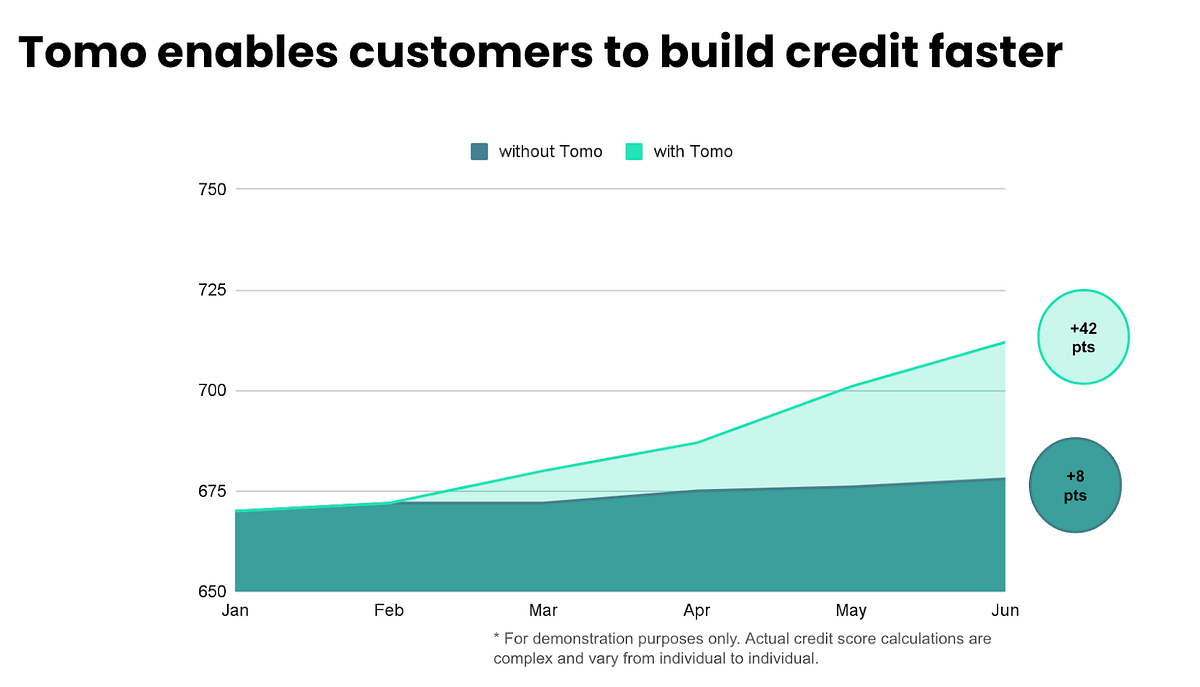
    • Users’ credit scores increasing by 29 points on average*
    • Over 200,000 total customers answered that they saw positive changes in their credit report within the first 6 month period. And Tomo helped them feel more confident about their personal finance.
    • Able to offer personalized insights on cash flow and its impact on credit health
    • Leverage our proprietary technology to give users personalized credit building tips

    We refined our product over the years, but all in service of continuing to fulfill our mission for the long term.

    We remain quick and agile as we launched our second product, TomoBoost, a credit repair service that can boost credit scores intelligently using real time data. We are continually improving our product and have rich insights to help our customers.

    • Since 2019, we gathered 18 million verifiable bank accounts data based on users’ consents
    • Customers want Tomo to help them with two topics which we are building our product around. (1)Learn more about their personal finance, especially about personal credit (2)Get instant insights of their cash flow in and out, so they can better manage their cash flow.

    That brings us to now.

    2023 was a challenging year for fintech startups, but also presented upside opportunities for those who figured out how to adapt quickly. Let me explain. First off, a series of unimaginable events happened in the beginning of 2023:

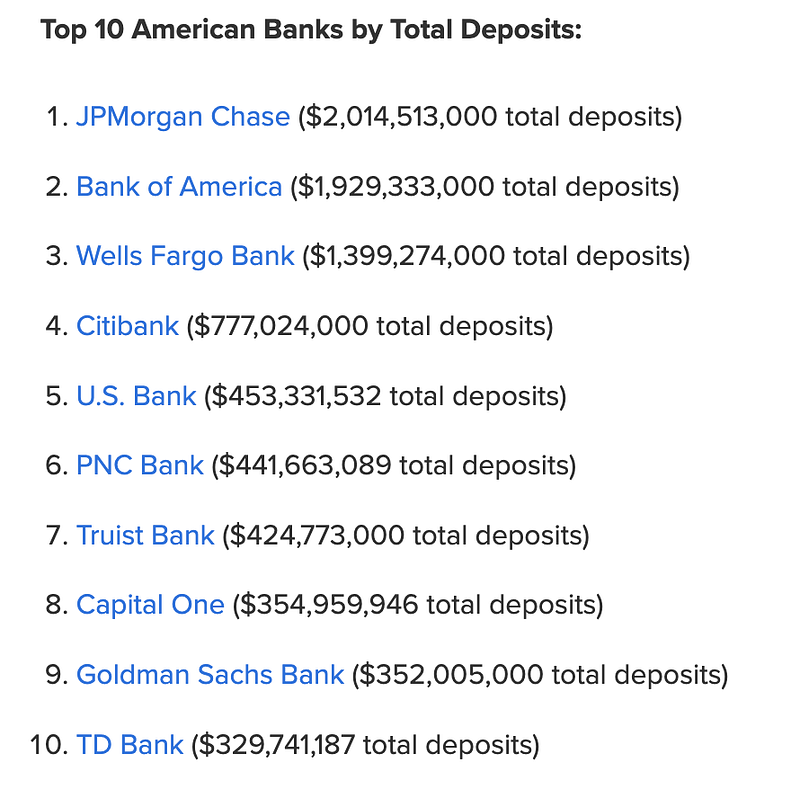
    1. Rate Increase: Lending startups struggled as the cost of capital doubled, making it challenging to maintain margins. For many fintech companies, cash is their product, and when the cost of goods (cost of capital) goes up too high, lending fintech startups simply cannot survive. It seemed like only big banks could weather this storm, as they do have billions of customer deposits that fintechs simply don’t have. (below is the 2022 FDIC datapoint).

    Source: Dec. 31, 2022, data from the FDIC.

    2. Riding the shifts in Consumer Trends: With the rate increase, consumers became more vigilant with managing their personal finance (both personal credit and spending in general). If you think about it, back in 2021, everyone got good rates — with or without a good credit score. Now, with a score below 650, you are simply in trouble. This made credit building popular, with high user demand- Tomo was able to ride the wave at the perfect timing. The key here was listening to our customers who have been with us since 2019 and learning what they liked or disliked about Tomo.

    Also, we noticed that the credit building space is ripe for innovation; the space has been lacking new data driven products in the past decades. With huge consumer demand, Tomo launched in 2019 with our own proprietary technology to give users personalized credit building tips.

    3. Startups, by nature, are resilient. We are not the smartest or the wealthiest, but oh boy, we are resilient. That means many founders figured out — or had to figure out. When founders are faced with this type of market events that are out of their control, they are forced to focus on “internal data and IP.” For example, for Tomo, we built our own proprietary cash flow data in the past 5 years, and we gathered over millions of bank account data (checking accounts, savings accounts, investment accounts, 401k, etc.). We used the cash flow data to build “TomoScore,” an AI-powered cash flow management solution. This allowed us to help our customers manage their cash flow easier and manage their debt/credit better. This became a big hit as it aligned with the customer trends of being vigilant with money

    Closing thoughts:

    I first landed in the U.S. as a student without a credit score, without a U.S. bank account. I am beyond grateful that in 2024, I get to continue to challenge the status quo with an amazing, world class team at Tomo. Many people say that good intentions are not enough because it seems too easy, but our team at Tomo are “doers” with good intentions committed to building a better tomorrow. We, at Tomo, deeply thank each and every one of our supporters. It is simply impossible to challenge the status quo in finance unless it is done with careful, well-thought out collaborations. We are in this together.

    ** Average outcome for customers who opened a Tomo account in Q1 2022, starting VantageScore 3.0 under 600, who made on-time payments. Other factors, including activities at other lenders may impact results. Tomo reports both positive and negative on-time payments history based on their bank data.

  • Shop Smart Online: 7 to Use Your Credit Card Safely

    Have you ever been online shopping and all of a sudden a pop-up message blocks your whole screen with a message like, “A virus has been detected on your computer. Please click on the link to remove the virus from your computer,” or something of that nature?

    Well, you’re not alone. Millions of people every day are sent phishing emails or scam alerts, making online shopping one of the most prevalent places for your financial information to be compromised.

    Here are 7 tips on how you can use your credit card safely for online shopping:

    1. Shop on trusted websites. Make sure to check the site has a lock to the left of the website URL.
    2. Avoid using public Wi-Fi. Public Wi-Fi is often unsecured and very vulnerable to hackers.
    3. Update your passwords. If the website you are shopping on asks for you to create a password for your account, make sure to create a password that is strong and unique. Don’t use a password that you use for your important accounts (i.e. financial accounts).
    4. Be alert for phishing scams. Make sure you pay attention to the details. If you receive “fishy” emails or emails from unfamiliar people requesting your attention and action,, do not respond with any personal information or click on any links they send you. If your credit card company offers fraud alerts, make sure they are turned on.
    5. Monitor your accounts regularly. Log into your credit card accounts regularly and make sure to check there aren’t any suspicious or fraudulent activities. Make sure to report any fraudulent/suspicious activity to your provider immediately.
    6. Update anti-virus/computer software. Make sure you frequently update your computer’s software and any anti-virus software to prevent malware attacks.
    7. Use a credit card you designate to online purchases only. Try to also use a credit card that has your lowest credit line when making online purchases. That way, if you accidentally make a purchase from an unsecured or scam site, you limit yourself from fraudulent withdrawals.

    In conclusion, while online shopping can be an easy and convenient way to shop these days, you want to make sure you are aware of any potential risks you put your credit cards in. Some credit card companies, like TomoCredit, have a huge emphasis on credit card safety and send fraud alerts or allow you to lock your account from your phone yourself. This option allows users to be in control of the safety of their finances. Check with your credit card companies to see if they offer options like this for you!

  • 3 Traits of Financially Successful People

    Financial success, in many ways, is a game that everyone is trying to master.

    We did extensive research on how some of the biggest winners at this game play it and concluded that these 3 traits describe financially successful people:

    #1: Financially successful people live below their means.

    This may come as a surprise to some, but not many. I have met a handful of financially successful people in my life and the #1 similarity between these individuals was that all of them had a hard time spending their money. All of them talked about how they stick to a budget, only spend when necessary, and try to put money in their savings or toward their retirement fund. Emergencies come up sometimes, and having funds to take care of those situations is extremely helpful, especially in dire situations.

    #2: Financially successful people always look for a bargain

    Sometimes we assume that financially successful people spend their money on anything they want and don’t check the price tag. Though this may definitely be true for some, I wouldn’t say it is true for all. After doing much research online and reflecting on the financially successful individuals I have encountered myself, I’ve found that these individuals are always looking for the best deal. They don’t settle on the first item they see. Instead, they compare prices online, leave the store, check out another for the same item, and even negotiate. Just because they can afford it, doesn’t mean they are willing to spend all that money on the item(s). Financially successful people stay financially successful because every penny counts.

    #3: Financially successful people have an aversion to debt

    Most financially successful people you meet or read about usually say that they keep their debts to a minimum or pay them off quickly. They typically talk about their debt payoff strategy and target ones that are small and easy. These individuals also make sure that when they do take out any loans, they pay attention to interest rates! This is extremely important when taking out any loan or opening a new credit card. Credit cards, like TomoCredit, offer credit with 0% APR/interest, so it is helpful to those who don’t want to rack up a ton of interest fees when opening a new line of credit.

    In conclusion, we feel that financially successful people have these 3 traits. That’s not to say that all financially successful people do or don’t and that others who are not financially successful yet do or don’t either. But if you do have these traits, you are on your way to financial freedom!

  • 8 Tips to Maximize Your Tax Refund

    Tax season is here! The IRS just announced that Monday, 1/23/23, was the first day they would begin accepting and processing 2022 tax year returns. The deadline to file is 4/18/23, so save the date on your calendars! If you plan on making some big purchases with your refund, you might want to read on for some tips and tricks to help you get your biggest refund yet!

    Here are 8 tips that will help you maximize your tax refund:

    #1: Take advantage of an FSA account if your employer offers it

    As part of Tomo’s benefits, we offer all of our employee’s the option to contribute to an FSA account. An FSA account, or Flexible Spending Account, allows you to put money in an account for eligible FSA expenses. When you need to use your FSA dollars, the money is deducted automatically from your paycheck before taxes are taken out. You can save on average 30% by using pre-tax dollars to pay for eligible FSA expenses.

    #2: Donate to charity

    According to the IRA, you may deduct charitable contributions of money or property made to qualified organizations if you itemize your deductions. Generally, you may deduct up to 50 percent of your adjusted gross income, but 20 percent and 30 percent limitations apply in some cases.

    #3: Claim credit for energy-efficient home improvements

    This credit offers a maximum value of $1,200 per year from 2023 through 2032 and can go toward investments like qualified energy efficiency improvements made to domestic residences (i.e. improvements towards qualified exterior windows, doors and skylights, and building envelope components).

    #4: Max out your IRA.

    IRAs are a great way to save towards your retirement while reducing your taxable income. Make sure the IRA account is a traditional IRA and not Roth. Roth IRA accounts are not tax deductible now, but traditional IRAs offer tax deductibility in the present.

    #5: Reconsider filing status if you are married

    Filing status is important because it determines your credit eligibility, filing requirements and standard deductions. If you and your spouse have similar or identical incomes, a marriage penalty could affect your tax return. Consult a tax professional if you are unsure if you should file jointly or separately.

    #6: Itemize deductions

    According to IRS, you may benefit from itemizing if any of the following circumstances apply to you:

    • You cannot use the standard deduction.
    • You racked up pricy uninsured medical and dental expenses.
    • You paid interest or taxes on your mortgage.
    • Your employee business expenses were unreimbursed.
    • You gave money to charities.

    #7: Start your tax preparation now to avoid delays!

    If your tax return is simple to prepare and you only have a w-2, it is better to get it done as soon as possible. The IRS processes over 100 million returns each year and can sometimes experience delays due to heavy incoming tax forms. Choosing a direct deposit method for your return may also be the best and quickest option.

    #8: If you are a gig worker, count your work as income

    If you are/were a delivery driver, Uber driver, or did any other work as an independent contractor, you must report your earnings and file your income on your tax return.

    We hope that this information was helpful for you to get your biggest refund yet! For more financial tips and tricks, be sure to subscribe to our Medium page and also check out our website www.tomocredit.com.

  • How this Startup is Making Credit Accessible to Everyone

    It’s 2023, but is there still structural racism in the credit card industry? In a survey from 5000 Americans, studies found that BIPOC individuals reported having the lowest or no credit score.

    Though the disadvantage for BIPOC folks has played a significant role in lack of financial education and literacy, this hasn’t stopped them from taking their personal finances into their own hands.

    Our credit card company, TomoCredit, aims to make credit accessible to everyone. We believe that all Americans deserve the right to credit and that no one should be discriminated against because of their race, status, age, etc.

    We are a startup based out of SF, CA, and our founder Kristy Kim, is a South Korean immigrant. Our team is also made of immigrants (90% of Tomo employees are immigrants/POC) and we built TomoCredit to solve our own acute pain points of not having credit history in the U.S.

    In addition to our diverse team, 95% of our TomoCredit customers are POC, which speaks to our unique understanding of just how different credit access for white Americans vs credit for everyone else works. To date, Tomo has helped over 3M people get access to credit they normally wouldn’t have had access to (with no fees or interest).

    If you are interested in learning more, please reach out to press@tomocredit.com

  • GenZ will spend $50 on a cup, but won’t pay off their high APR credit cards

    Many of you may have heard of the infamous “Stanley Cup/Tumbler” trending all over TikTok. Consumers that have fallen prey to this trend seem to be GenZ, many posting cup reviews all over the app. Although the tumblers do have pretty rave reviews and seem to do the job, the cost of the cup is pretty hefty. But with BNPL options, it’s easy for GenZ to spend their money on microtrends.

    What GenZ doesn’t understand is that the cup they thought was $50, is actually near $60 with interest fees. APR awareness is important, and it is definitely more important than a $50 cup you could probably buy off Amazon for $20 cheaper.

    High APR and interest rates are the culprits of many microtrends from BNPL purchases. It’s important that GenZ understand the repercussions of credit card debt and spending.

    TomoCredit, a credit card that has 0 interest/APR and virtually allows you to never carry a balance, wants GenZ and others to be aware of BNPL while shopping. Fees rack up quickly, and the last thing you want is to carry a balance you can’t pay.

    If you are interested in learning more, please reach out to press@tomocredit.com.