Tag: Entrepreneurship

  • TomoCredit Founder Kristy Kim Shares the Personal Story Behind Building TomoCredit

    From immigrating to the United States at age 11 to building TomoCredit, Kristy Kim reflects on the lessons, relationships, and risks that shaped her entrepreneurial journey.

    When people ask me what led me to build TomoCredit, they’re often looking for a single defining moment.

    The reality is much less straightforward. Like most entrepreneurial journeys, mine was shaped by a series of experiences, challenges, and lessons that gradually influenced the way I see opportunity, risk, and access.

    Recently, I found myself reflecting on the qualities that have had the greatest impact on my journey as a founder. Three themes kept surfacing: curiosity, adaptability, and trust. Looking back, those lessons show up in nearly every major chapter of my life, from immigrating to the United States as a child to working in investment banking and eventually launching TomoCredit.

    The Curiosity That Led to TomoCredit

    I’ve always been curious. As a child, I asked endless questions. As an adult, not much has changed.

    That curiosity is one of the reasons TomoCredit exists today.

    Before becoming a founder, I worked in investment banking. On paper, I had done everything right. I graduated from college, built a successful career, and had enough money in my bank account to purchase a car outright. Yet when I applied for a loan, I was denied.

    The reason wasn’t income or employment. It was credit history.

    I remember feeling completely confused. How could someone be financially responsible and still be locked out of the financial system?

    The more I learned, the more questions I had. Why were so many people being judged by a system that often failed to capture their actual financial behavior? Why were immigrants, students, and young professionals struggling to access opportunities despite having the ability to succeed?

    What started as a personal frustration eventually became a mission. The more I learned, the more I realized that millions of people were facing similar barriers. That curiosity ultimately became the foundation for TomoCredit.

    Learning to Adapt Before I Knew What Entrepreneurship Was

    Long before I became a founder, I had to learn how to adapt.

    When I was 11 years old, I left South Korea and moved to the United States to attend school. I left behind everything that was familiar and moved in with a host family.

    At the time, I didn’t fully appreciate how difficult that decision must have been for my parents. I was excited about the opportunity. Looking back now, I understand how much courage and trust it required from them.

    That experience taught me something that has continued to serve me throughout my career: very few things go according to plan.

    The transition from finance to entrepreneurship was filled with uncertainty. Building a startup required me to learn skills I never anticipated needing, navigate challenges I couldn’t have predicted, and make decisions without having all the information I wished I had.

    Today, adaptability feels more important than ever. Technology is evolving rapidly, industries are changing, and entire categories of work are being redefined. The people who thrive won’t necessarily be the ones with all the answers. They’ll be the ones willing to keep learning and adjusting as circumstances change.

    The Power of Relationships

    Many of the most meaningful opportunities in my life came through relationships I invested in over time.

    Not because I needed something from someone. Not because I was collecting business cards. But because I genuinely cared about building connections with people.

    Whether you’re building a company, hiring a team, raising capital, or launching a new product, very little happens alone. People remember whether you show up, follow through, and are willing to help when there’s nothing immediately in it for you.

    Trust is built through countless small actions that often seem insignificant in the moment but become incredibly meaningful over time.

    At TomoCredit, relationships have been central to everything we’ve built. From our customers and employees to investors and partners, every step of the company’s growth has been made possible by people who believed in our mission and chose to support it.

    The Greatest Gift My Parents Ever Gave Me

    Both of my parents are entrepreneurs in South Korea. Growing up, I watched them build businesses, solve problems, and navigate the realities of entrepreneurship long before I understood what any of those things meant.

    They taught me resilience, responsibility, and the importance of hard work. But the most impactful thing they ever gave me wasn’t advice.

    It was trust.

    When I was 11 years old and wanted to move to the United States, they could have easily said no. Looking back now, I can only imagine how frightening that decision must have been. Instead, they chose to trust me. They believed in me before I had accomplished anything that would justify that belief.

    That trust changed the way I viewed myself and what I believed was possible.

    Every major chapter of my life since then has required stepping into uncertainty. Moving across the world. Working in investment banking. Starting TomoCredit. Raising capital. Building a team. Launching new products.

    None of those decisions came with guarantees.

    What my parents taught me is that waiting for certainty is often a losing strategy. Progress usually requires conviction, preparation, and a willingness to move forward despite uncertainty. It also helps to have people who believe in you and provide a foundation strong enough to support those risks.

    The Lessons Behind TomoCredit

    When people look at TomoCredit today, they see a financial technology company focused on helping people build credit and access opportunities. What they don’t always see are the experiences and lessons that shaped the company’s mission in the first place.

    TomoCredit exists because I was curious enough to question a system that didn’t make sense. It exists because I learned to adapt when plans changed. And it exists because people believed in me long before there was evidence that they should.

    Looking back, those lessons have shaped far more than my career. They’ve shaped the way I approach life. And I suspect they’ll continue to do so for many years to come.

    Editor’s Note: Kristy Kim recently discussed her entrepreneurial journey, leadership philosophy, and personal story in an interview with Bold Journey. Read the full interview here.

  • Fintech, making changes together

    2023, the year Tomo learned how to “ride”with the waves

    It has been 5 years since Tomo launched and we continue to surf the unpredicted waves of fintech to ultimately continue our mission of building a better tomorrow. I’m not saying it was easy, but we’re proud of what we’ve achieved around credit building and credit repair.

    When we launched our first product, TomoCard, we received an overwhelming amount of interest while improving the lives of our customers.

    • 3.5 Millions users
    • Users’ credit scores increasing by 29 points on average*
    • Over 200,000 total customers answered that they saw positive changes in their credit report within the first 6 month period. And Tomo helped them feel more confident about their personal finance.
    • Able to offer personalized insights on cash flow and its impact on credit health
    • Leverage our proprietary technology to give users personalized credit building tips

    We refined our product over the years, but all in service of continuing to fulfill our mission for the long term.

    We remain quick and agile as we launched our second product, TomoBoost, a credit repair service that can boost credit scores intelligently using real time data. We are continually improving our product and have rich insights to help our customers.

    • Since 2019, we gathered 18 million verifiable bank accounts data based on users’ consents
    • Customers want Tomo to help them with two topics which we are building our product around. (1)Learn more about their personal finance, especially about personal credit (2)Get instant insights of their cash flow in and out, so they can better manage their cash flow.

    That brings us to now.

    2023 was a challenging year for fintech startups, but also presented upside opportunities for those who figured out how to adapt quickly. Let me explain. First off, a series of unimaginable events happened in the beginning of 2023:

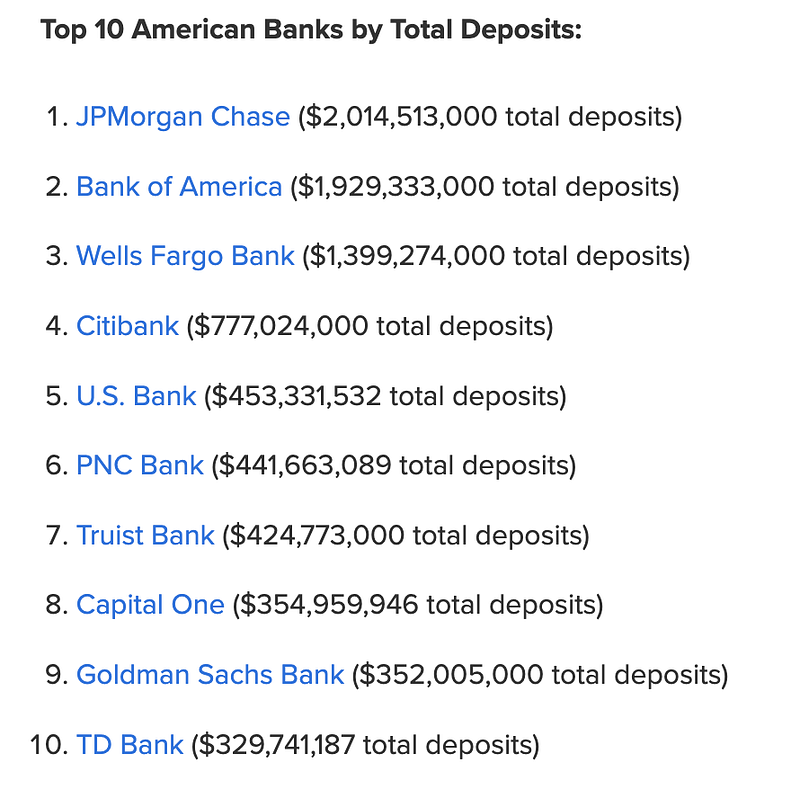
    1. Rate Increase: Lending startups struggled as the cost of capital doubled, making it challenging to maintain margins. For many fintech companies, cash is their product, and when the cost of goods (cost of capital) goes up too high, lending fintech startups simply cannot survive. It seemed like only big banks could weather this storm, as they do have billions of customer deposits that fintechs simply don’t have. (below is the 2022 FDIC datapoint).

    Source: Dec. 31, 2022, data from the FDIC.

    2. Riding the shifts in Consumer Trends: With the rate increase, consumers became more vigilant with managing their personal finance (both personal credit and spending in general). If you think about it, back in 2021, everyone got good rates — with or without a good credit score. Now, with a score below 650, you are simply in trouble. This made credit building popular, with high user demand- Tomo was able to ride the wave at the perfect timing. The key here was listening to our customers who have been with us since 2019 and learning what they liked or disliked about Tomo.

    Also, we noticed that the credit building space is ripe for innovation; the space has been lacking new data driven products in the past decades. With huge consumer demand, Tomo launched in 2019 with our own proprietary technology to give users personalized credit building tips.

    3. Startups, by nature, are resilient. We are not the smartest or the wealthiest, but oh boy, we are resilient. That means many founders figured out — or had to figure out. When founders are faced with this type of market events that are out of their control, they are forced to focus on “internal data and IP.” For example, for Tomo, we built our own proprietary cash flow data in the past 5 years, and we gathered over millions of bank account data (checking accounts, savings accounts, investment accounts, 401k, etc.). We used the cash flow data to build “TomoScore,” an AI-powered cash flow management solution. This allowed us to help our customers manage their cash flow easier and manage their debt/credit better. This became a big hit as it aligned with the customer trends of being vigilant with money

    Closing thoughts:

    I first landed in the U.S. as a student without a credit score, without a U.S. bank account. I am beyond grateful that in 2024, I get to continue to challenge the status quo with an amazing, world class team at Tomo. Many people say that good intentions are not enough because it seems too easy, but our team at Tomo are “doers” with good intentions committed to building a better tomorrow. We, at Tomo, deeply thank each and every one of our supporters. It is simply impossible to challenge the status quo in finance unless it is done with careful, well-thought out collaborations. We are in this together.

    ** Average outcome for customers who opened a Tomo account in Q1 2022, starting VantageScore 3.0 under 600, who made on-time payments. Other factors, including activities at other lenders may impact results. Tomo reports both positive and negative on-time payments history based on their bank data.

  • 3 Traits of Financially Successful People

    Financial success, in many ways, is a game that everyone is trying to master.

    We did extensive research on how some of the biggest winners at this game play it and concluded that these 3 traits describe financially successful people:

    #1: Financially successful people live below their means.

    This may come as a surprise to some, but not many. I have met a handful of financially successful people in my life and the #1 similarity between these individuals was that all of them had a hard time spending their money. All of them talked about how they stick to a budget, only spend when necessary, and try to put money in their savings or toward their retirement fund. Emergencies come up sometimes, and having funds to take care of those situations is extremely helpful, especially in dire situations.

    #2: Financially successful people always look for a bargain

    Sometimes we assume that financially successful people spend their money on anything they want and don’t check the price tag. Though this may definitely be true for some, I wouldn’t say it is true for all. After doing much research online and reflecting on the financially successful individuals I have encountered myself, I’ve found that these individuals are always looking for the best deal. They don’t settle on the first item they see. Instead, they compare prices online, leave the store, check out another for the same item, and even negotiate. Just because they can afford it, doesn’t mean they are willing to spend all that money on the item(s). Financially successful people stay financially successful because every penny counts.

    #3: Financially successful people have an aversion to debt

    Most financially successful people you meet or read about usually say that they keep their debts to a minimum or pay them off quickly. They typically talk about their debt payoff strategy and target ones that are small and easy. These individuals also make sure that when they do take out any loans, they pay attention to interest rates! This is extremely important when taking out any loan or opening a new credit card. Credit cards, like TomoCredit, offer credit with 0% APR/interest, so it is helpful to those who don’t want to rack up a ton of interest fees when opening a new line of credit.

    In conclusion, we feel that financially successful people have these 3 traits. That’s not to say that all financially successful people do or don’t and that others who are not financially successful yet do or don’t either. But if you do have these traits, you are on your way to financial freedom!