Tag: Financial Planning

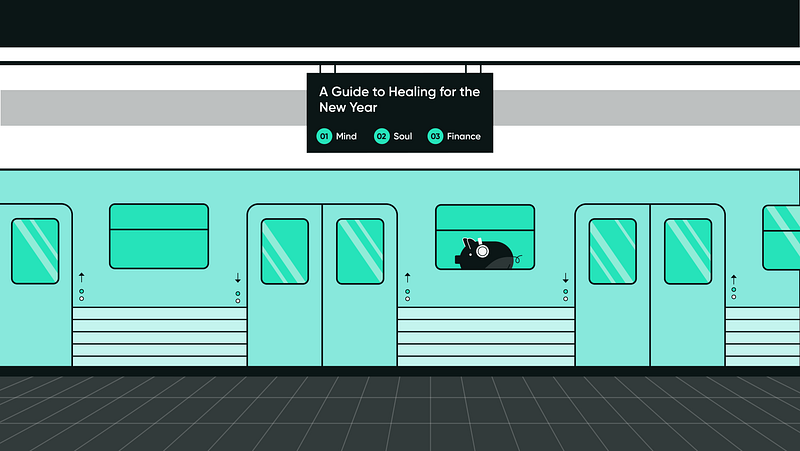
  • Tomo’s Guide to New Year Healing

    As we continue into the month of January, there’s no better time than now to revisit the topic of new year’s resolutions. It is common for the start of a new year to present us with a mix of emotions; excitement and anticipation often come with feelings of unease and anxiety. After the champagne is popped and the ball drops, the world holds its breath for the next calendar year to come. New year’s resolutions make their appearance in the collective consciousness, and while last year taught us that plans often fall through, it is human nature to continue striving for excellence and to find the light through difficult times.

    The crucial lessons that we learned in staying resilient through the adversities of life means that this year carries the weight of hope, rebuilding, and growth. We hope that this short guide to mindful, soulful, and financial healing will help you build your best resolutions so that you may prosper through 2021 and beyond.

    Mindful Healing

    As the widely recognized saying goes, “health is wealth.” You don’t need us to remind you of the truth in this statement and that it can be applied to more than just physical health. It is always helpful to keep this motto close to the top of your mind when making even small decisions in your everyday life, which likely still looks like the “new normal” of working and studying from home.

    In taking care of your health, your mind should be a top priority. Stress, lack of sleep, and poor diet can keep you from functioning at your full potential. When our minds are tired, it’s difficult to be clear-headed and productive. A clear separation between work and personal life will help you maintain your sanity as stay-at-home orders continue for the time being.

    Physically separating work from home can be done by designating work space, and further solidify this by trying to limit your productive hours. It is easy to get caught up in work or school, especially now that it seems to have bled into the home, but making the conscious effort to separate these worlds will help you in the long run by preventing burn-out. In addition, this allows you to take time to focus on personal self-care, such as yoga, meditation, reading, or napping.

    In short, treat your mind like a muscle that needs time to rest and recover after moments of strenuous usage.

    Soulful Healing

    Whether you identify as a spiritual person or not, everyone can find little joys in life that can contribute to soulful healing. Deciding what your soul is seeking this year may require some insightful contemplation, as each person’s soul is unique. For many, this may be taking on a creative hobby such as embroidery, painting, or playing an instrument.

    Finding time to engage in self-expression through creation heals the soul, as it is something that you are choosing to do based on your interests and passions alone. There are many resources available online in the form of free and paid courses for nearly any topic you want to try. Any sort of creation is a great way to heal soulfully, even if you don’t see yourself as a creative person. Learning how to cook or bake by trying out recipes online is another fulfilling way to nourish your body and soul.

    In a modern world where much of our time is spent working towards career or academic goals, it’s necessary to allocate some parts of your day to creating something just for yourself.

    Financial Healing

    We get it, talking about money isn’t always comfortable, but it is one of the most common topics when discussing new year’s resolutions. The previous year’s events have affected everyone differently, but what is especially notable is that these events revealed that circumstances can and do change frighteningly fast. We want to balance hope with realistic expectations, and the truth is that we can not expect our lives to shift back to normal anytime soon.

    Taking a large financial hit during uncertain times would find anyone anxious, but building healthy foundational knowledge of your financial situation will help. Financial security has always been an issue, now even more so, meaning that it’s important to enter the new year with a plan to ensure your present and future financial livelihood.

    If you haven’t already, do your research in order to improve your financial literacy so that you can be informed when you start to map out your finance goals. Some great sources include Refinery29’s Money Diaries, Ellevest Magazine’s Money and Life section, and Tomo Credit’s own blog. Understanding which aspects of your finances you can actually take control of will help you greatly, especially when you start early.

    For starters, if you haven’t established a credit score yet, check out Tomo Credit’s zero-interest, no-fee credit card. Since Tomo Credit doesn’t require a previous credit score to apply, this credit card can help you wisely build a good credit reputation with responsible use, helping you grow healthy financial habits. Financial healing starts with reflection, understanding, and planning.
  • Do You Really Need a Savings Account?

    Saving is always wise — but is a savings account the best way to save money?

    What is a Savings Account?

    While checking accounts are used to store money for daily expenses like food or bills, savings accounts are used to store money over a long period of time. Although fees and withdrawal limits may be drawbacks, savings accounts also offer safety and reliability.

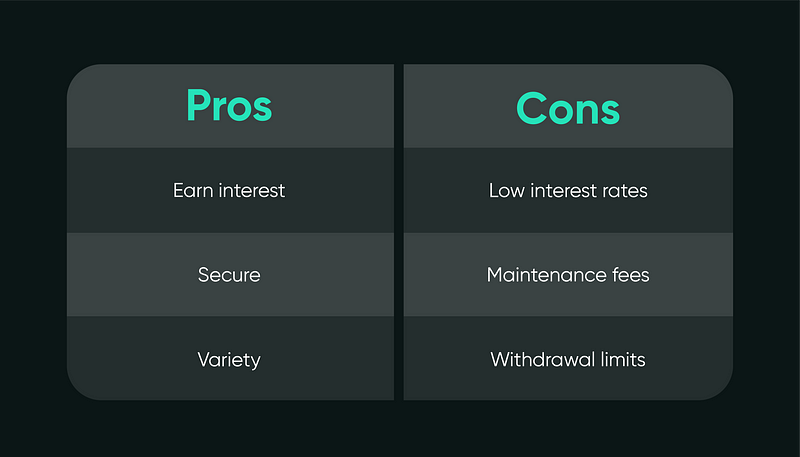
    Each type of savings account differs in interest and accessibility, but they generally share these pros and cons:

    Pros

    Earn Interest

    The biggest advantage to savings accounts is that they build interest over time. With your money deposited in their accounts, banks are able to loan money to other customers. Banks return the favor to you by paying interest on the savings accounts. Therefore, the longer you keep the money in your savings account, the more money and the more worthwhile it will be for you. Typically, it’s advised to not touch your savings account as long as possible. Forget about it for some years, don’t do anything, and you’ll earn money.

    Secure

    If you choose a savings account from a Federal Deposit Insurance Corporation (FDIC) member bank, your account will be insured up to $250,000 under the law. With federal protections, savings accounts are a reliable way to store your emergency funds. To find out if your bank is FDIC-insured, check out FDIC’s Bank Data Guide.

    Different Kinds for Different Needs

    Besides standard savings accounts, banks are offering more varieties of ways to help you save. High-yield accounts offer higher APY rates compared to basic accounts. The only catch is that you may not be able to access them at bank branches or an ATM. Banks also are offering different types of savings accounts depending on customers’ niche needs. The 529 Plan is tailored for saving for college education costs, offering tax benefits depending on the state you open one in. These specialty accounts all offer interest and security, although they may have stricter restrictions on withdrawals and spending.

    Cons

    Slow and Low Interest Rates

    As much as the idea of earning money while doing nothing sounds attractive, the interest rates are incredibly low. The current national average interest rate according to the FDIC is 0.05% APY. Compared to interest rates of other deposit account options like Certificate of Deposits (CDs) and money market accounts, 0.05% is a very low number. For a full view on national rates on the different kinds of accounts, check out FDIC’s Weekly National Rates and Rate Caps charts.

    Fees

    To maintain services, banks may ask for a monthly maintenance fee of $4 or $5. In addition, if your funds fall below a minimum requirement, you will be asked to pay fees as well. If you do choose to open a savings account, it is crucial to keep yourself updated on any updated terms and conditions to make sure you avoid fees that may deduct from your earned interest.

    Withdrawal Limits

    Under the Federal Reserve’s Regulation D, savings account holders are not able to withdraw or transfer funds from their accounts more than six times in a month. This limit allows banks to still reserve some of your deposit and stay in business by using the rest of your money for other services. If you exceed the limit, you may be charged fees, or the Fed may close your account altogether.

    However with the widespread impact of the pandemic on individual finances, the Fed lifted the limit on the number of withdrawals and transfers on April 24 to help account holders access their savings and emergency funds.

    Main Takeaways

    Before opening a savings account, set your personal goals and consider which of the pros and cons matter more to you. There are different kinds of savings accounts, but there are also alternatives to long-term saving rather than opening a basic savings account. You may also look into different kinds of savings accounts and open multiple ones.

  • The Waitlist, Some Changes, and What’s Next: An Update From Tomo

    This pandemic has no doubt been hectic for everybody. With millions of Americans losing their jobs, millions unemployed, and millions infected, millions of us are growing more and more frustrated. When the shelter-in-place orders began back in March, like most of you, we were worried about what the future would hold for us. As most of you know, working remotely presents its challenges. But we are reorganizing and getting back on track. We just wanted to take the time to write this to let you know that…

    We Hear You

    We have received countless inquiries about the Tomo waitlist and rightfully so. An overwhelming amount of you have been waiting for your card for months at this point, and we understand your frustration. As of now, we have over 100,000 people on the waitlist. Due to some changes related to the pandemic, we currently process all of our pre-approvals manually. The moment they are processed, we send out invites in waves and, thankfully, we will be sending out an increasing number of waves in the coming months. We recommend that over the course of these next few months that you keep an eye out for your invite. If you don’t receive an invite by then, please reach out to us. We are in the process of reorganizing our customer support and will be adequately prepared to answer any questions you may have for us moving forward. However, due to the volume of applications we have received, please keep in mind that we will be prioritizing the questions of current cardholders first.

    We know that sounds like a long time, but it will be worth it. Trust us. We have big plans for the future here at Tomo!

    What’s Changing

    Since the pandemic provided some unpredictable challenges, our credit card has had to make some fundamental readjustments. With a heavy heart, we must eliminate the Tomo Credit Card “2 for 2” cash back referral perk. We hope to be able to deliver you other more unique and personalized rewards in place of the “2 for 2” referral program, and we intend to work with merchants in order to create a user experience that you’d expect from “the credit card of tomorrow”. Don’t worry, you will still receive 1% cashback on all purchases and we will continue to offer you a history-free credit card with flexible limits and no hidden fees. Our goal here at Tomo has always been to help our members establish the financial security they deserve, not to profit off of their financial insecurity like the big banks do. For those of you that have referred members to tomo, fear not, as our new referral program will be released in the near future and you will still be awarded for those referrals.

    We can also offer one other awesome perk to you should you meet the requirements, and that’s up to 20% cashback. Yeah, you read the right. 20%. If 20% cashback is what you desire and you think you’re qualified, we encourage you to apply to become a Tomo ambassador! As ambassador, you will promote the Tomo card and encourage your community to sign up for one via a personalized referral code. For each person you refer that gets approved, you will receive an additional 1% cash back, with a maximum cap of 20%. That means that if you get 20 people to sign up, you’ll get that sweet 20%. Keep in mind though that the ambassador cashback bonus is valid for 3 months from the time each of your referrals is approved. Think you can do it? Apply to become an ambassador here!

    What’s in Store

    We cannot thank our members enough for their overwhelming support. Tomo has always believed that you are worth more than an arbitrary credit score. We have always been dedicated to helping our members build credit and save money, and, moving forward, we hope to win back your trust. As we proceed, we will be making adjustments to our card in order to better cater to our members’ needs.

    But first things first: I think that we can all agree that this year has just got to end already. When the pandemic begins to slow down, we promise to speed things up, and to be more prepared than ever to provide you with the experience you deserve from the credit card of tomorrow.

  • Are Credit Cards Worth It?

    Do you really need that extra piece of plastic in your wallet? Yes, and here’s why.

    Build credit.

    A credit score and credit history may seem ambiguous now, but there will come a day when you will wish for that high credit score and long credit history. Whether it is renting or buying a property or financing a car purchase or some other large purchase, your credit score and credit history matter. They will determine if you get approved for that new home or new car, and the borrowing rate you are charged. Would you rather pay more than necessary? Absolutely not, no one does. Time to get a credit card and start building that credit.

    Rewards.

    There are so many credit cards out there and most of them offer some form of rewards, sometimes even just for signing up! Besides sign-up bonuses, most credit cards offer continuous cash back rewards as you use the card. Why not start paying yourself back for spending money?

    Interest-free borrowing.

    By using credit cards, you can borrow money for a short period of time and pay zero interest as long as you pay off the credit card in full by the payment due date. You can’t get a lower rate than that.

    Peace of mind.

    Most credit cards come with some form of insurance these days. This means if you have a fraudulent charge on your card, you can easily report it to your bank and get the funds back right away. If you rely on using cash for all transactions, you risk getting it stolen or simply losing it. With a debit card, your money actually leaves your bank account if a fraudulent charge were to occur. You will eventually get your money back, but it can take longer than if it were to happen to a credit card.

    Avoid foreign transaction fees.

    There is a lot of world to see and that requires traveling. If you get the right credit card, you can avoid foreign transaction fees when traveling in a different country, which can add up quickly. Save your money for traveling and don’t waste it on fees.

    Convinced you need a credit card now?

    Be one of the first to get in on the next generation of credit cards. Visit TomoCredit.com to learn more.