Tag: Tomocredit

  • Start a Business With Bad Credit (2026 Guide): Loans, Cards & Funding Options

    Yes — you can start a business with bad credit. A low credit score may limit some traditional financing options, but it does not stop you from becoming an entrepreneur. Today, there are multiple ways to get startup funding, build business credit, and improve your financial profile while growing your business.

    If you have been wondering whether bad credit will prevent you from launching a company, the answer is no. The key is understanding which business funding options are realistic, how personal credit differs from business credit, and what steps you can take right now to improve your approval odds.

    According to the Consumer Financial Protection Bureau, millions of Americans have credit scores that fall below the range many traditional lenders prefer. That means you are far from alone — and you still have options.

    Can You Start a Business With Bad Credit?

    Yes, you can absolutely start a business with bad credit. While a lower score may make it harder to qualify for traditional bank loans, many entrepreneurs launch successful businesses using alternative funding sources, secured business credit products, and smart credit-building strategies.

    Bad credit is not the end of the road. It is simply your starting point.

    Why Bad Credit Should Not Stop You From Starting a Business

    Traditional banks are only one part of the small business funding landscape. Many lenders and financial platforms now look beyond a credit score alone. Some evaluate your revenue, banking history, cash flow, or overall business potential instead.

    This means a poor credit score does not automatically disqualify you from getting the tools you need to launch and grow a business. Instead, it means you need to focus on the financing products and lenders that are designed for borrowers in your position.

    Personal Credit vs. Business Credit: What New Entrepreneurs Need to Know

    One of the biggest misconceptions among first-time founders is that personal credit and business credit are the same thing. They are not.

    Your personal credit score reflects your individual borrowing history. Your business credit profile reflects how your business manages financial obligations. Once your business is legally formed, you can begin building business credit separately from your personal credit history.

    To start building business credit, you should:

    • Register your business entity
    • Get an EIN from the IRS
    • Open a dedicated business bank account
    • Apply for business credit products that report payment history
    • Pay vendors and creditors on time

    Over time, this can help your business develop its own credit identity, even if your personal score still needs work.

    Best Business Funding Options for Bad Credit

    If you want to start a business with bad credit, these are some of the most realistic financing options to explore.

    1. Microloans

    Microloans are small business loans, often offered through nonprofit lenders and community-based programs. Many microloan providers look at your business plan, character, and repayment ability rather than only your credit score.

    2. CDFIs

    Community Development Financial Institutions, or CDFIs, specialize in serving entrepreneurs who may not qualify for traditional financing. They are often more flexible with lower credit scores and can be a strong option for underserved founders.

    3. Revenue-Based Financing

    If your business is already generating sales, some lenders may offer funding based on your revenue instead of your credit score. This can be useful for business owners with weak credit but strong cash flow.

    4. Merchant Cash Advances

    Merchant cash advances provide upfront funding in exchange for a portion of future sales. These can be easier to access, but they are usually more expensive, so they should be approached carefully.

    5. Secured Business Credit Cards

    A secured business credit card can be one of the best ways to start building business credit. You provide a deposit, use the card for business purchases, and establish payment history over time.

    How to Check Your Credit Before Applying for Business Funding

    Before applying for any business loan or business credit card, you need to know where your credit stands today. That means checking your score, reviewing your report, and identifying any issues that may be lowering your approval chances.

    Check Your Credit Score

    Start by reviewing your current credit score so you have a realistic picture of where you stand. This helps you narrow your options and avoid wasting applications on products that are out of reach.

    Look for Credit Report Errors

    Errors on your credit report can drag your score down without you realizing it. These may include:

    • Accounts that do not belong to you
    • Incorrect balances
    • Outdated negative marks
    • Fraudulent activity
    • Incorrect payment statuses

    Disputing inaccurate information can potentially improve your score faster than many other strategies.

    How TomoIQ Can Help You Start a Business With Bad Credit

    Tomo and TomoIQ are designed to help users better understand their financial profile and discover financial products matched to their situation.

    With TomoIQ, users can:

    • Check their credit profile
    • Identify issues that may be hurting their score
    • Explore business cards and funding options
    • Get matched with products based on real financial data
    • Take steps toward building stronger personal and business credit

    Instead of guessing which lenders or cards may approve you, TomoIQ helps simplify the search process and make your next financial move more strategic.

    How to Build Credit While Running a Business

    If you are starting a business with bad credit, your goal should be to build both your business credit and your personal credit at the same time.

    Ways to Improve Personal Credit

    • Make every payment on time
    • Keep credit utilization low
    • Avoid applying for too many accounts at once
    • Review your credit reports regularly
    • Dispute inaccurate negative items

    Ways to Build Business Credit

    • Use a dedicated business bank account
    • Apply for business credit products that report to bureaus
    • Pay all vendors on time
    • Register with Dun & Bradstreet
    • Keep business finances separate from personal finances

    These habits can strengthen your financial foundation and help you qualify for better terms over time.

    Step-by-Step: What to Do Right Now

    1. Check your current credit score.
    2. Review your credit report for errors or fraudulent accounts.
    3. Apply for an EIN through the IRS.
    4. Open a dedicated business checking account.
    5. Register your business credit file with Dun & Bradstreet.
    6. Explore business funding options that fit your profile.
    7. Apply for a secured business credit card if appropriate.
    8. Use TomoIQ to track progress and identify next steps.

    Frequently Asked Questions

    Can I get a business loan with bad credit?

    Yes. While traditional banks may be more restrictive, some microloan lenders, CDFIs, online lenders, and revenue-based financing providers work with borrowers who have lower credit scores.

    Can I get a business credit card with bad credit?

    Yes. Secured business credit cards and some alternative-underwriting products may be available to entrepreneurs with bad credit or limited credit history.

    Will starting a business hurt my personal credit?

    Starting a business by itself does not hurt your personal credit. However, some business loan or card applications may involve a hard inquiry or personal guarantee, which can affect your score temporarily.

    How fast can I improve my credit score?

    The timeline depends on your specific profile, but paying down revolving balances, making on-time payments, and disputing inaccurate report items can lead to improvements faster than many people expect.

    Should I wait until my credit improves before starting a business?

    In many cases, no. You can begin building your business credit while also working on your personal credit. Starting sooner may help you establish momentum in both areas.

    The Bottom Line

    You do not need perfect credit to become a business owner. You need a realistic plan, the right funding strategy, and tools that help you understand what is actually available to you.

    Bad credit may affect where you start, but it does not determine how far you can go.

    If you want to explore credit tools, funding options, and smarter next steps based on your real financial profile, visit TomoIQ.

  • 7 Types of Credit Disputes That Can Boost Your Score (“How To” Guide)

    Your credit report shapes your financial life — from loan approvals to interest rates to job applications. When something on it is wrong, you have the legal right to fight back through a process called a credit dispute. But not all credit disputes are the same.

    In this guide, we break down the most common types of credit disputes, what causes them, and exactly what you can do to fix them — including how AI tools like TomoIQ are making the process faster and more automatic than ever.

    QUICK ANSWER

    What is a credit dispute?

    A credit dispute is a formal challenge you file with a credit bureau (Equifax, Experian, or TransUnion) to correct inaccurate, incomplete, or unverifiable information on your credit report. Under the Fair Credit Reporting Act (FCRA), bureaus must investigate within 30 days.

    In This Article

    • 1. Bankruptcy Disputes
    • 2. Delinquency Disputes
    • 3. Identity Theft & Fraudulent Account Disputes
    • 4. Incorrect Balance or Account Status Disputes
    • 5. Collections Disputes
    • 6. Hard Inquiry Disputes
    • 7. How the Dispute Process Works (Step-by-Step)
    • 8. Frequently Asked Questions
    • 9. How TomoIQ Automates Credit Dispute Detection

    1. Bankruptcy Disputes

    Bankruptcy is one of the most damaging — and most error-prone — items on a credit report. Chapter 7 bankruptcies can stay on your report for 10 years; Chapter 13 for 7 years. Given that timeline, even a small mistake can follow you for a decade.

    Common bankruptcy dispute reasons:

    • Bankruptcy listed as open when it has already been discharged
    • Accounts included in the bankruptcy still showing individual balances owed
    • Wrong bankruptcy type listed (e.g., Chapter 13 reported as Chapter 7)
    • Bankruptcy still appearing after the legal reporting window has expired

    How to dispute it: Pull your reports from all three bureaus and compare them against your court discharge papers. File disputes with each bureau reporting an error and include certified copies of your documentation.

    2. Delinquency Disputes

    A delinquency — any payment reported 30, 60, or 90+ days late — can drop your score significantly. Even a single late mark on an otherwise clean record can cost you. But lenders and servicers make mistakes.

    Reasons to dispute a delinquency:

    • Payment was made on time but applied late by the creditor
    • Account was in a hardship, deferment, or forbearance program
    • Delinquency is older than 7 years and should have aged off
    • Payment was returned due to a billing address error — not your fault

    How to dispute it: Gather bank statements and payment confirmations. File a dispute with supporting documents. If you have written confirmation of a hardship plan, include that too.

    3. Identity Theft & Fraudulent Account Disputes

    Identity theft can silently wreck your credit before you even notice. Fraudulent accounts, unauthorized inquiries, and wrong personal details all need to be disputed as quickly as possible.

    Red flags to look for:

    • Accounts or loans you don’t recognize
    • Hard inquiries from lenders you never applied to
    • Addresses or employers listed that aren’t yours
    • Sudden, unexplained drops in your credit score

    How to dispute it: Place a fraud alert or credit freeze immediately at all three bureaus. File a report at IdentityTheft.gov (FTC). Dispute every fraudulent account with documentation of your identity theft report.

    4. Incorrect Balance or Account Status Disputes

    The account might genuinely be yours — but the data being reported is simply wrong. Incorrect balances inflate your credit utilization, which directly hurts your score.

    • A loan you paid off still showing a balance
    • A closed credit card listed as open
    • Credit limit reported lower than your actual limit (inflates utilization)
    • A settled collections account still listed as unpaid

    How to dispute it: Contact the creditor first — they are the source of the data. If they don’t fix it, file a dispute with the bureau and provide your payoff letter, closing confirmation, or settlement agreement.

    5. Collections Disputes

    Debt that goes to collections gets sold and re-sold — and every transfer is a new opportunity for errors. Collections disputes are among the most common and often the most winnable.

    • The debt simply isn’t yours (mixed files, wrong identity)
    • The debt is past the statute of limitations for your state
    • The same debt is being reported by multiple collectors simultaneously
    • The amount reported is inflated with fees or interest you don’t owe

    How to dispute it: Send a debt validation letter to the collector within 30 days of first contact. If they can’t prove the debt is valid and belongs to you, they must stop reporting it.

    6. Hard Inquiry Disputes

    Hard inquiries happen every time a lender checks your credit for an application. Unauthorized inquiries — ones you never approved — are illegal and can be removed.

    • You never applied for credit with that company
    • The inquiry may signal identity theft
    • A company ran your credit without a permissible purpose (a FCRA violation)

    How to dispute it: Dispute the inquiry with the relevant bureau and contact the company to demand they explain why they pulled your credit. Unauthorized inquiries must be removed.

    7. How the Credit Dispute Process Works (Step-by-Step)

    The dispute process is your legal right under the Fair Credit Reporting Act. Here’s exactly how it works:

    1. Get your free credit reports at AnnualCreditReport.com from all three bureaus
    2. Identify the item(s) you want to dispute and note the bureau(s) reporting it
    3. Gather supporting documentation (bank statements, letters, court records)
    4. File your dispute online, by certified mail, or by phone with the relevant bureau
    5. The bureau has 30 days to investigate (45 days if you submit new information)
    6. Receive written results — if corrected, request updated reports from all bureaus
    7. If rejected, add a statement of dispute, escalate to the CFPB, or consult a consumer attorney

    8. Frequently Asked Questions

    These questions are commonly asked by people researching credit disputes and TomoCredit online.

    What is TomoCredit used for?

    TomoCredit is a fintech company built to help people build and protect their credit — especially those who have been overlooked by the traditional credit system.

    TomoCredit is used for:

    • Automatically scanning your credit report to find errors and inaccuracies
    • Identifying potential disputes — like incorrect delinquencies, outdated accounts, or fraudulent entries — before they do lasting damage
    • Building credit history without requiring a traditional credit score to start
    • Providing AI-powered financial guidance through TomoIQ, TomoCredit’s intelligent financial agent

    With TomoIQ, users don’t have to manually comb through their reports — the AI does it for them, flagging issues and explaining what to do next in plain language.

    What happened to TomoCredit?

    TomoCredit has evolved. Originally known for its no-credit-check credit card that helped newcomers and thin-file consumers build credit, TomoCredit has since transformed into a fully AI-native financial company.

    The company’s flagship product is now TomoIQ — an AI financial agent designed to give every person access to the kind of smart, personalized financial guidance that used to be reserved for those who could afford a financial advisor.

    Think of it as TomoCredit leveling up: from a credit card company to an AI-powered financial co-pilot that helps you monitor your credit, catch disputes early, and make smarter money moves every day.

    Does TomoCredit card have a $2,000 limit for $7.99?

    Yes. But the limit depends on your Credit Score and TomoScore. TomoCredit recommends a wide range of credit products, starting from $100 to all the way to $100,000

    This makes it one of the most accessible credit-building cards available, especially for:

    • New immigrants and international students with no U.S. credit history
    • Recent graduates starting their credit journey
    • Anyone rebuilding credit who wants to avoid a secured card deposit

    The card reports to all three major credit bureaus, helping you build a real credit history — and with TomoIQ watching your report, you’ll know immediately if anything looks off.

    9. How TomoIQ Automates Credit Dispute Detection

    Most people don’t dispute credit errors because they don’t know the errors are there — or they don’t know what to do when they find one. That’s the problem TomoIQ was built to solve.

    TomoCredit’s AI financial agent continuously monitors your credit report and automatically flags the kinds of issues covered in this guide: outdated bankruptcies, incorrect delinquencies, suspicious hard inquiries, stale collection accounts, and more.

    With TomoIQ, you get:

    • Automatic error detection — no manual report-reading required
    • Plain-language explanations of what each issue means for your score
    • Step-by-step dispute guidance tailored to your specific situation
    • Ongoing monitoring so new errors don’t slip through

    You deserve a credit profile that reflects who you actually are — not a history full of errors and outdated information. TomoIQ is here to make sure it does.

  • What I Spend in aWeek as a College Student in Berkeley, CA

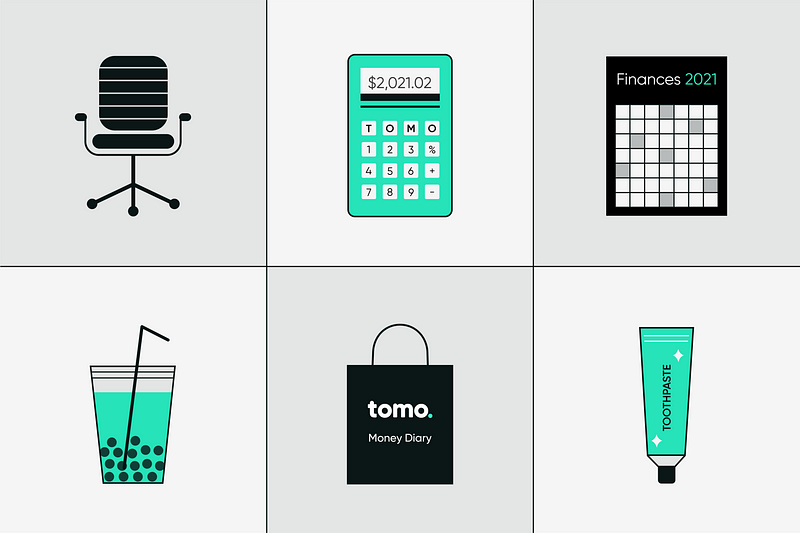
    As a college student, it’s been difficult to balance studying with managing my finances. Being a student living in Berkeley, it’s also hard to fight cravings for late night boba or ramen, which can add up fairly quickly if done too often. Since I love reading Refinery29’s Money Diary series, I decided to do one of my own. Looking back and seeing my expenses for the week really helped me open my eyes to my spending habits so that I know how to better manage my finances in the future.

    Day One

    I woke up right before logging onto zoom for my morning class and had two shots of espresso with dairy-free creamer. I am addicted to caffeine so I purchase a bulk pack of Nespresso pods from Amazon ($1.50/pod = $3)

    I ordered some necessities from Target since I was running low on dental floss and facial cleanser. I also ordered some mouthwash and toothpaste since I would run out of those things eventually. ($30)

    I also decided to purchase a new workout set from Girlfriend Collective. I have a set in black from them already, so I know that I love their fit and quality. I went for a matching sports bra and legging set in moss green. ($100)

    Day Two

    I knew today would be really busy for me, so I braced myself for a day of classes and meetings with another cup of doubleshot espresso with creamer, courtesy of my housemate’s Nespresso machine. ($3)

    I grabbed lunch and dinner at the dining hall during my short breaks since I have an off-campus meal plan. I don’t know how to cook, and I don’t have a car so going out to buy groceries is often a pain for me. Each meal comes out to an average of $9 or less. ($18)

    Day Three

    It was another busy day for me that started off with a doubleshot and creamer. ($3)

    After a morning class and meeting with my college advisor, I had to hop on Amazon and order a new office chair for my desk. I’ve been borrowing my housemate’s chair since they don’t use it, but it’s too uncomfortable. I used an Amazon gift card so the total was less than I expected. ($18)

    Then I grabbed lunch, which was sun-dried tomato pasta, tri-tip, and seasoned cabbage. ($8)

    Day Four

    I’m taking a class about Wall Street this semester, so everyone is talking about Reddit’s power on the stock market. After browsing some subreddits for a bit, I noticed that DogeCoin was getting some attention. DogeCoin has interested me for a while, so I decided to put a little money in just to see what would happen. ($10)

    For dinner, I couldn’t resist the temptation of spicy ramen and milk tea. Before my last class of the week, I placed an order for red tonkatsu ramen and a black tea latte at my favorite ramen place across the street. No regrets. ($15)

    Day Five

    It’s the weekend! The day escaped me, as I took the time to recharge and relax. One huge perk of living in Berkeley is that so many restaurants are open late at night. I went out for a late night snack and grabbed a slice of pepperoni pizza and a banana cream pie milkshake. ($14)

    Day Six

    I got breakfast with a friend at a cafe across the street from my apartment. They do really good eggs, so I went with an eggs benedict with french toast and fruit. ($15)

    Later in the day, I got a taro boba as a reward to myself! I also got red tonkatsu ramen again since the cravings were overpowering my sense of self-control. ($15)

    Day Seven

    Rent is due today. I have autopay so I don’t have to worry about it, but I log into the payment portal anyway just to make sure my payment went through. ($650)

    For lunch, I picked up a sandwich at a cafe on campus using my meal plan points. The sandwiches there are pretty good, but they are only a tad more expensive than picking up a meal at the dining hall. I got a salmon and coleslaw sandwich on a brioche bun. ($12)