
Category: Sarah James

TomoCredit consumer value report

  • Money Saving Habits for College Students

    This school year is unlike any other. For both continuing students and freshmen, the college experience is fundamentally changed and provides new and unique challenges on top of the constant existential dread of just being a student. However, may we find reassurance in the constants of college life, such as the fact that college students are always trying to find new and innovative ways to save a dollar or two. Here are some money saving tips and habits to keep in mind as you navigate the upcoming academic year.

    Rent your textbooks

    Buying the required textbooks for all your classes every semester adds up quickly. Let’s be honest, does that 600 page Intro to Physics textbook have much practical use when classes are over besides serving as a very expensive paperweight? Know how to get your work done without having to drop cash on textbooks. With most libraries closed at the moment, it’s no longer possible to drop in and do homework using reserve copies.

    However, never fear, for there is a solution for you studious folks. Many online retailers offer rental programs, allowing students to borrow textbooks for however long they need. The best part is, you can rent both hardcopy and ebook versions of most textbooks for quite cheap. Hardcopy rentals come with a free return label that you attach to the box it was shipped in when you’re ready to return your books. If you prefer not to worry about shipping your rentals back, ebook rentals are instantly available and can be accessed from any device until your borrowing period ends.

    Rent your laptop and wifi

    Check if your college has a tech rental or device lending program. Many universities have implemented such programs to ensure students have access to online learning materials. Students in need of essentials such as a laptop or wifi hotspot are encouraged to utilize their college’s resources so that you can continue getting a quality education to the best of your instructor’s abilities.

    Bored? Check out your local library

    Libraries across the country are online. If you’ve never had a city library card before, it’s better to get one now than never. Learn that language, read that biography you’ve been meaning to read, if we’ve learned anything about ourselves the past 6 months is that it never hurts to take time for yourself. Let the library’s resources help you with that. Also, you’d be surprised at how much your county library has to offer; many of them also offer audiobooks, films, and music!

    Student perks

    Although it may not seem like it some days, being a student has its perks. Check in with your college to see if they offer free programs such as Adobe Creative Suite or Microsoft Office. These can easily cost you hundreds of dollars out of pocket. Apart from productivity programs, students are also blessed with student discounts from a variety of retailers and companies such as Spotify and Crocs.

    Free food!!

    Colleges around the country understand how tough it is for everyone right now and are implementing programs to help alleviate some of the issues students are facing as of late. If you are facing food insecurity, check to see if your college has an open pantry or free grocery program. These programs are dedicated to providing students with fresh fruits and vegetables and other pantry staples. Bonus: having all these fresh ingredients will inspire you to strengthen your cooking abilities, which is always a solid skill to have.

    Create a monthly budget

    At the beginning of each month, evaluate your spending habits. Did you overspend on anything? Have you gone out to eat more often than you intended? You may need to confront yourself. It may be uncomfortable at first, but you will eventually develop a sense of discipline and restraint that will benefit you in the long run. Use the 50/30/20 rule to allocate your budget for the month into the categories of needs, wants, and savings. With this method, you will put 50% of your budget to needs such as groceries and bills, 30% will go to wants like dining out or anything else that is not essential but enjoyable, and 20% is stored away in a savings account. Just remember that this is a general guideline, and everyone has different financial situations.

    It’s cheaper to eat healthy

    Stocking up on snacks, energy drinks, and instant ramen at the grocery store seems like the cheaper and easier option for daily sustenance. However, there’s a reason the mantra “health is wealth” is so universally lived by. Being mindful of how you are eating has its long term health benefits, sure, but we’re talking about cash here. Fresh produce at a few dollars a pound can go way longer than a frozen meal at the same price. Download the apps of your nearest grocery store and watch how far your dollar can go.

    Got credit? Maintain a high credit score!

    Perhaps having a high credit score is the last thing on your mind, with exams always around the corner and figuring out what you’re going to eat for dinner. These are present and valid concerns, but it never hurts to prepare for the future. We all know that credit is a delicate game, but if you budget correctly and consistently make on-time payments then the benefits of having a high credit score will follow you even after you graduate! A good credit score means you’ll be paying lower interest on loans and you’ll have a higher chance of getting approved for better rates, saving you a ton of money and stress in the long run. Don’t know where to start? Get pre-approved for Tomo Credit — no fees, no interest, and no credit score needed! Learn more here.
  • Are Credit Cards Worth It?

    Do you really need that extra piece of plastic in your wallet? Yes, and here’s why.

    Build credit.

    A credit score and credit history may seem ambiguous now, but there will come a day when you will wish for that high credit score and long credit history. Whether it is renting or buying a property or financing a car purchase or some other large purchase, your credit score and credit history matter. They will determine if you get approved for that new home or new car, and the borrowing rate you are charged. Would you rather pay more than necessary? Absolutely not, no one does. Time to get a credit card and start building that credit.

    Rewards.

    There are so many credit cards out there and most of them offer some form of rewards, sometimes even just for signing up! Besides sign-up bonuses, most credit cards offer continuous cash back rewards as you use the card. Why not start paying yourself back for spending money?

    Interest-free borrowing.

    By using credit cards, you can borrow money for a short period of time and pay zero interest as long as you pay off the credit card in full by the payment due date. You can’t get a lower rate than that.

    Peace of mind.

    Most credit cards come with some form of insurance these days. This means if you have a fraudulent charge on your card, you can easily report it to your bank and get the funds back right away. If you rely on using cash for all transactions, you risk getting it stolen or simply losing it. With a debit card, your money actually leaves your bank account if a fraudulent charge were to occur. You will eventually get your money back, but it can take longer than if it were to happen to a credit card.

    Avoid foreign transaction fees.

    There is a lot of world to see and that requires traveling. If you get the right credit card, you can avoid foreign transaction fees when traveling in a different country, which can add up quickly. Save your money for traveling and don’t waste it on fees.

    Convinced you need a credit card now?

    Be one of the first to get in on the next generation of credit cards. Visit TomoCredit.com to learn more.

  • A message from our CEO

    We recognize with the ever-changing COVID-19 virus situation that this is an uncertain time for everyone. Our hearts and our thoughts go out to everyone on this planet that we call home.

    At the end of the day we are all human, and sooner or later we must all face challenging times. Preparing you, our customer, for future financial success is always our #1 priority. To ensure that our cardholders achieve that success even in these challenging financial situations, we are waiving required monthly payments for the next two months. We hope this will lessen the impact of the stresses we all face globally and hope it keeps you on track to financial success.

    The spirit and well-being of our team is what keeps Tomo’s dedication to your success alive. Considering the most recent news and announcements from the World Health Organization (WHO) and Centers for Disease Control and Prevention (CDC), we have made the decision to allow all employees to work from home for the next few weeks. We are offering extended sick leave for every team member and have temporarily suspended all business travel.

    Situations like these serve to remind us why Tomo’s vision is important! Giving underserved customers a way to gain the financial freedom they deserve is especially important in times like these, which serve only to motivate our team to work harder in the face of challenge. Team Tomo is still on schedule and working diligently, rolling out new features and processing applications. Our mission has always been to ensure an opportunity for everyone to easily access credit and start building their road to future financial success.

    Our love goes out to you all. We appreciate your support in helping redefine credit for the world! If you have any questions, please don’t hesitate to reach out to us at any time.

    Stay healthy,

    Kristy Kim
    CEO & Founder
    www.tomocredit.com

  • New to the U.S.? Start Building Your Credit Score Now

    Credit determines your financial future

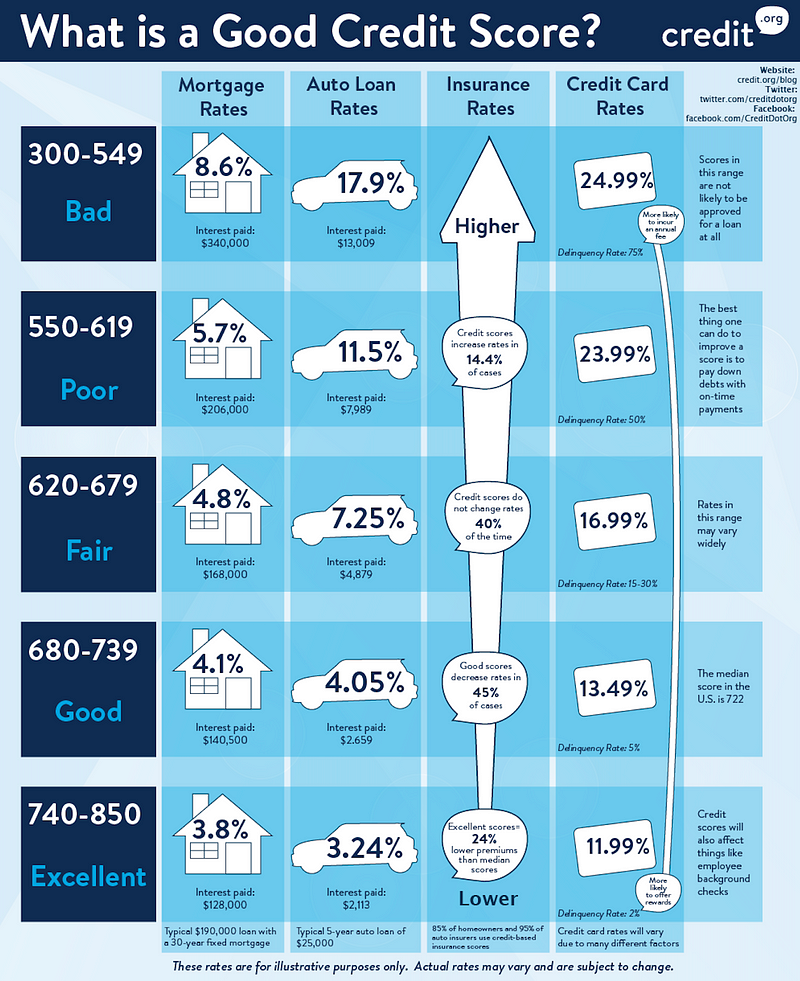
    In the US, having good credit matters more than ever. Having good credit will ensure you qualify for affordable rates on student loans, auto loans, insurance, and mortgages, saving you tons of money and making it easier to pay them back in the long term. Credit can determine whether you can qualify to rent an apartment by yourself, finance your iPhone/car/furniture, or land your dream job.

    Establishing strong credit is the first thing you should do when you land in the U.S., and it all begins with your first credit card. Having a good starting card allows you to build a strong credit history quickly and easily.

    Source: Credit.org

    No one starts with a great credit score — it takes some time to build. The three major credit bureaus in the U.S. — TransUnion, Experian, and Equifax — consider three to six months of credit activity before they start updating your credit report.

    Starting your credit journey as soon as you arrive in the U.S. is one of the wisest things you can do for your financial future.

    Where do I start?

    Getting a credit card is the fastest and easiest way to begin building your credit score, but there’s often a catch — most credit card companies only issue credit to those who already have an established credit history. Because credit history is used as the main factor to determine the credit risk of an applicant, if you don’t have any credit history, it’s unlikely that you’ll get approved at all!

    This is where Tomo comes in… Tomo is a new generation of credit card that doesn’t require a credit score or security deposit to determine your creditworthiness. Tomo issues credit cards based on an evaluation of your banking history instead — your account balances, income, and spending trends. Tomo’s smart repayment system manages consistent on-time payments to help you build good credit, faster and more easily. Because Tomo is committed to helping you build good credit fast, it carries no fees of any kind! Did we mention Tomo offers a high cash back reward of up to 20%? You heard that right. Earning cashback while building credit has never been easier!

    Apply today and join the future of building credit.

  • Tomo — My first credit card as an international student! No credit score required.

    I recently moved to San Francisco from London to study for an MBA at Berkeley Haas because I wanted to be at the heart of the tech ecosystem and learn more about the innovation happening within financial services. In order to understand this landscape more, I wanted to work with a company innovating the space, and I’m lucky enough to be working with Tomo.

    Tomo addresses a huge pain point I had when I moved here as an international, a lack of US credit history. A lack of credit history meant I was unable to apply for almost all credit cards and unable to earn a variety of rewards offered by different card companies. Additionally, credit history is a requirement for some cell phone plans, for apartment rental eligibility and it can have an adverse impact on the amount you pay for insurance premiums. However, through lots of market research for an alternative and for interesting Haas affiliated fintech companies, I came across Tomo which was tackling both of these issues.

    Tomo is a fintech startup that currently offers a credit card that does NOT require you to have a credit score, which is exactly what I was looking for. I reached out to the founder Kristy and was able to get an early look at the product and the functionality they are offering. They are also working on technology that allows you to get approved for a card without having an SSN which is how I was able to get a card. This is a game-changer for international students who often have no credit history or SSN.

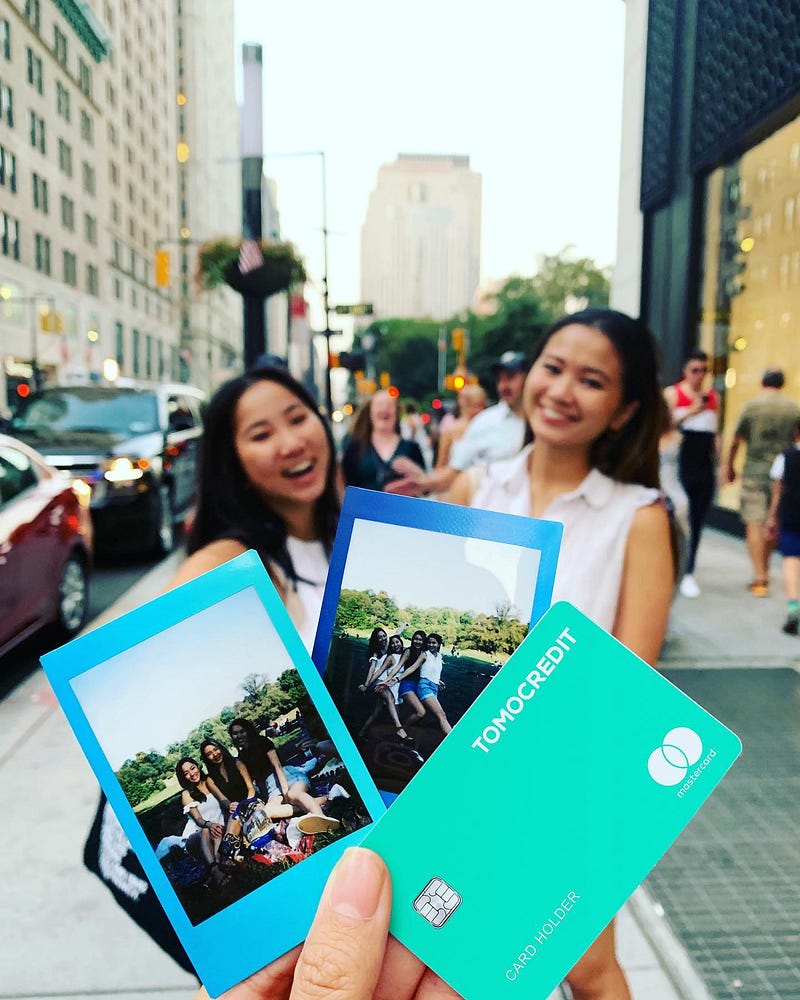
    Me with my Tomo card!

    Not only did they get me my first credit card, but they also offer crazy cashback! For every person you refer and is approved, you will EACH receive an additional 1% in cashback which is how in a short amount of time I’m earning 8% cashback! You can do this with up to 19 people at a time allowing you to boost your cashback up to 20%. Whilst doing all of this, I am building up my credit history! It’s honestly amazing.

    There is limited availability and the waitlist is filling up fast. So if you are looking for a modern-day credit card with the best cashback or you have no credit score or SSN, then Tomo is the card for you!

    Use my referral link below and we both get an additional 1% in cashback when you sign up: https://tomocredit.com/?referral=KXiBt5

  • The New Tomo Card

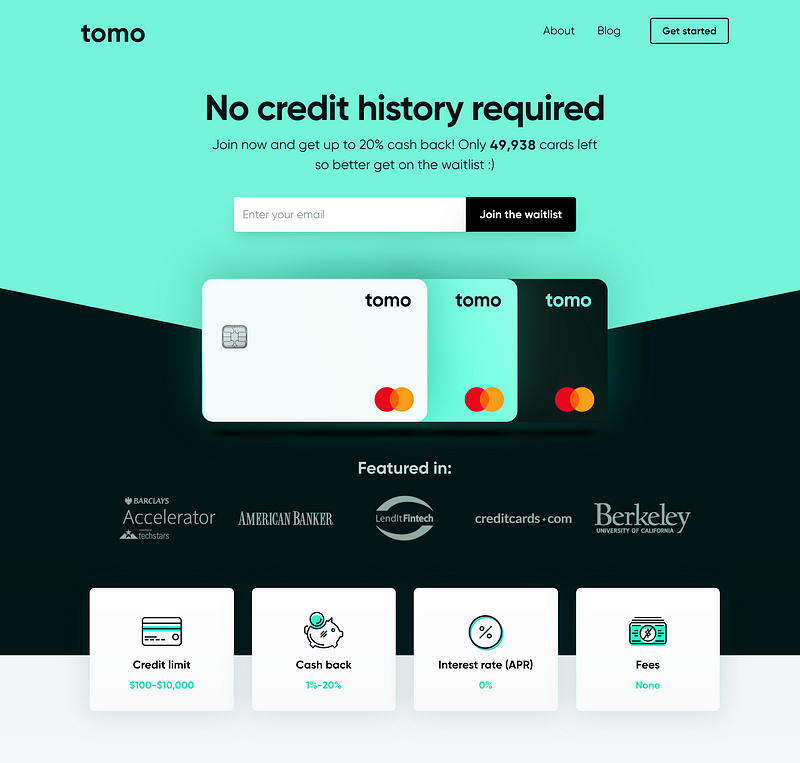
    The Tomo Website

    Here at Tomo, we know you’re not just a credit score. When you sign up today not only can you get approved with no credit history but we are the first card offering up to 20% in cashback. EVER.

    How does it work?

    First, you’ll want to sign up for our waitlist. When you get your welcome email, simply apply for our card like you would for any other credit card — minus the credit check! Tomo Credit assesses your eligibility not by looking at your credit score, but by analyzing your banking history.

    Once accepted you will receive a unique referral code that you can share with your friends, colleagues and acquaintances. For each person that is approved for a card, you both receive 1% in cashback rewards.

    Cashback works via redeeming the Tomo points you earn from spending on your Tomo card for cash. For example, if you have referred 19 people that get approved for a Tomo card, you will earn 20% in cashback. When you spend $100, you will receive 2,000 points. 100 Tomo points = $1 in cash so the 2,000 Tomo points you earned are worth $20 in cash which can be withdrawn into your checking account. It’s that simple.

    Your cashback bonuses for referring people are valid for three months and you can replenish these with new referrals to keep your cashback high for a longer period.

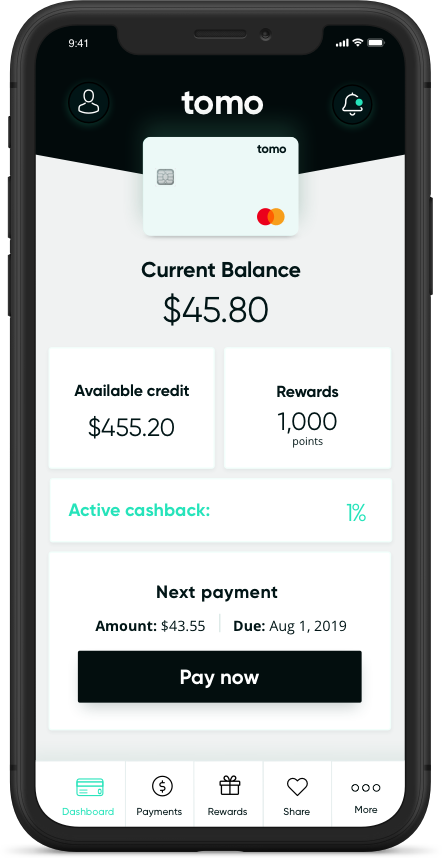
    You can track your balance, rewards, and pay off your card on the dashboard on mobile or web browser.

    Tomo cards are currently limited to only 50,000 so the quicker you sign up the better. Also, don’t forget the more you share, the more rewards you will earn!

    You can get on the waitlist by using the below link:

    Join the waitlist

    In the future, we hope to offer you other types of rewards that you can redeem your Tomo points for, including crypto currency.

    We are here to help! If you have any questions please don’t hesitate to contact us.

  • 5 best ways to build your credit score

    For better or worse, one of the most important metrics in your financial life is your credit score. Most Americans aren’t well informed of this in their traditional upbringing and as a result are left playing catch-up later in life or simply don’t understand some of the core benefits of having a high credit score.

    This 3-digit number can either cost you or save you hundreds of thousands of dollars over the course of your lifetime and the sooner you can get ahead of it the more beneficial it will be for your life.

    Here are 5 of the best ways we at TomoCredit recommend to best improve your credit score

    1. Create accounts and monitor your credit scores frequently

    Improving your credit score starts with knowing what it exactly is. We recommend creating accounts on at least two of the major credit card portals including Credit Karma, Credit Sesame, Credit.com, Quizzle, and WalletHub. You can also create an account on AnnualCreditReport.com where you can check your credit report for free once every 12 months from each of the major credit bureaus — Equifax, Experian, and TransUnion. See the below graph (from Experian) for an idea of what the average American credit score is and what ranges are considered good — bad scores.

    From Experian

    2. Pay your bills on time

    Get this tattooed, carve it in stone, or repeat it over and over again until it’s memorized. This is probably the easiest way for an individual to steadily build their credit score over time but is also the most abused. It’s simple and straightforward yet millions of Americans take liberties with their credit card spending and let their credit payments carry over consecutive months and damaging their credit scores. Inherently credit scores are a reflection of your ability to pay off debts over time signaling your reliability. You can positively influence this indicator by using calendar reminders or setting your bills on auto-pay to help ensure you pay on time every month. Paying your bills late or settling your debts for less than what you agreed on will negatively affect your score.

    3. Keep your balances low

    An important part of today’s credit scoring systems is your credit utilization ratio. This ratio is calculated by looking at the credit balances you have across all your cards at a given time and dividing that by the total credit limit you have across all of your credit cards. What you are left with is a ratio that has a significant weight to your total credit score. Lenders look for credit ratios of 30% or less, so your credit utilization ratio should fall below this number in order for it to have a positive impact on your score. Example: if you typically have $1k a month in credit balances and your total credit limit across your cards is $5k then your credit ratio is 20%.

    Best way to improve your credit utilization ratio, and as a result your credit score, is to keep your overall balances low! On this note if you have unused cards we recommend not closing these accounts as long as you aren’t paying costly fees. The additional credit limits will help your credit utilization ratio as long as you keep the account open but just don’t spend on them.

    4. Avoid too many hard credit inquiries and don’t open more accounts than you need

    Applying for loans or new credit cards will result in hard inquiries which can take a negative toll on your credit score and remain on your record for 2 years. This can ultimately be mitigated over time but requires careful overview. If you already have cards open be smart about which accounts you utilize and avoid closing credit lines if you don’t need to. At the same time however don’t open new credit cards if you don’t need them and put your spending habits at risk.

    5. Start building and proactively maintaining your credit score as early as possible

    The toughest part of starting to build your credit history is not having one at all. At some point you’ll need to qualify for a credit card and start building up a balance with regular payments to show future creditors and lenders that you are a trustworthy borrower. Not many cards will take chances on immigrants or even young professionals. This is where we at TomoCredit hope to help empower folks towards building a healthier credit history. Our card uses alternative evaluation methods compared to traditional card providers to ensure that you can get a card that will serve you with high rewards and put you on the path to financial success.

    TomoCredit is a part of everyone’s family!

    Follow @TomoCredit on Twitter and Instagram and sign up for our wait-list today at www.tomocredit.com to receive your own card.

  • Millennial Focus #1: Sri Ramakrishnan

    College is one of the toughest times to manage your personal finances.

    We know this and this is why we interviewed a (relatively) recent college grad and budgeting maestro Sri Ramakrishnan to learn more about his approach regarding college finances and personal tools.

    Our conversation here below:

    Tomo: Hi Sri, thanks for taking the time to chat with us! How long has it been since you were last in college and what did you study?

    Sri: Thanks for having me! I graduated undergrad in 2017 and I majored in Economics.

    Tomo: Did you have any jobs or internships during college?

    Sri: I did indeed, I had a few jobs through my years in college. I was an English tutor during my sophomore year, worked as a barista at Starbucks for a summer, did a part-time internship at a technology startup alongside my classes during my junior year, and I did a full-time summer internship between my junior and senior year.

    Tomo: What were your spending habits like when you were in college?

    Sri: To be quite honest, I was (and still am) a fairly frugal individual. Throughout college I’d find ways to stay within specific budgets I had outlined for myself and make sure that I saved a significant percentage of my income when I was working.

    That being said, I always made sure to spend money on things that made my life easier or on areas that I felt were investments in myself. Through my senior year, I made a conscience effort to spend more money on experiences that I thought would enrich my life and would become memories I could look back on as opposed to material objects that didn’t give me much joy after the first purchase.

    Tomo: Did you have a credit card during college? If so what kind?

    Sri: I did but it was just a standard credit card issued by my bank with barely any rewards.

    Tomo: Did you use any tools to manage your budget or personal finances during these years?

    Sri: During my time in college I didn’t have a specific budget tracker as I do today (I currently manage all my monthly expenses manually on an excel spreadsheet) but I did use a few apps to invest my money and to generally become more financially literate.

    I first opened a Robinhood account during my junior year to put my money in a few individual companies I felt very strongly about. I was very compelled by the commission-free trading proposition and wanted to get involved with these stocks that I felt were promising. At the same time I opened an account with Coinbase and invested in Bitcoin and Ethereum after doing a lot of research. This was early in 2017, just at dawn for all the publicity that was brewing around the blockchain/crypto space. For personal transactions and peer-to-peer expenses I used Venmo, as it became impossible to navigate the college landscape without it. Other than these three, I just used my bank’s standard web portal to oversee my expenses and income.

    Tomo: Looking back, was there anything you wish you had done differently in regards to your personal finances?

    Sri: Honestly, I remember after my senior year vividly wishing I had a high rewards credit card through my time in college. There were so many random expenses from a variety of categories (especially food/travel) that I could have reaped rewards from. On top of this, I was paying the rent for my senior year apartment through Venmo to one of my roommates who would write to our landlord the check for all of us. I figured if I had a high rewards credit card throughout this time, I could have built my credit history through these consistent payments and potentially had secured some cash back.

    Tomo: Any tools you wish you had used or had during this time?

    Sri: Not to sound cheesy but a Tomocredit card would have been huge for me along with many of my peers during this time in college. I know it was hard for a lot of college students to qualify for high rewards credit cards during our pre-employment years without significant credit history or a credit score. Not to mention for me, especially during my years in college to have had a credit card where I could earn rewards in crypto would have paid off tremendously with the huge bull run for cryptocurrencies experienced in late 2017.

    Tomo: Any advice you’d give college students who are trying to manage their personal finances?

    Sri: Live within your means and try to save a little bit from every paycheck. Start investing in low cost Index funds as early as you can. Pay off any debt you may have as soon as possible (student loans, credit card etc). Once you have enough of a savings cushion, try to live within your means but don’t forget to go spend money on experiences and with people who will bring you joy. You only have one life so go live it up!

    Follow @TomoCredit on Twitter and Instagram and go sign up for our waitlist today at www.tomocredit.com

    To learn more about budgeting, and personal finance tips you can connect with Sri Ramakrishnan on Twitter and Instagram (@sreezy3000) or reach out to him on LinkedIn.

  • Welcome to TomoCredit- Tomo Score, Weekly budgeting

    Today we are excited to announce that we are opening up the sign-ups for TomoCredit credit card. The next generation credit card designed for people with no credit history or credit score.

    At TomoCredit our vision is to create an a financial system that is open and accessible to everyone. TomoCredit is the first step in that direction.

    With the up and coming launch of this credit card, students, immigrants, and other financially underserved members of the population can start building credit without relying on credit cards that require a deposit or have prohibitively high fees. In addition to building credit, our customers can also start tracking their weekly expenses using Tomo Score features.

    Every time you swipe your TomoCredit card, we track your spending and use that to build your Tomo Score.

    How did we create Tomo Score? Our in house risk experts teamed up with industry leaders from Amex, WellsFargo, Citi bank to develop Tomo’s own proprietary algorithm

    Join us and let’s build the future of credit together!