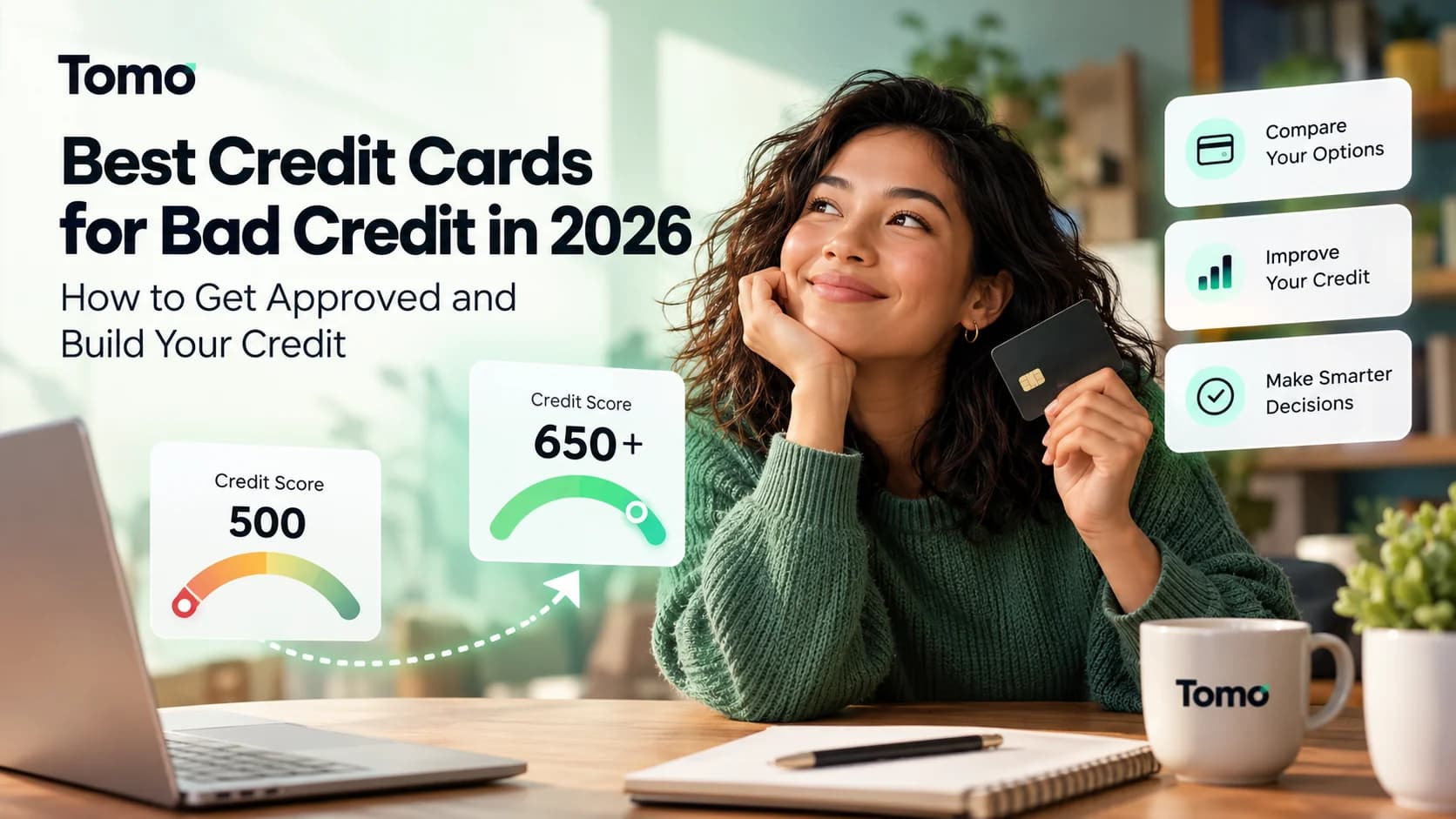
Best Credit Cards for Bad Credit in 2026: How to Get Approved and Build Your Credit
Bad credit doesn't mean you have to give up on getting a credit card. Learn which card types may fit your profile and how to improve your approval chances.


Written by Sarah James ·
Meet TomoIQ
Your AI-powered credit assistant.
You order a few gifts, book a flight home, and pick up groceries for the people staying at your house. Everything goes on the same credit card. You plan to pay the bill on time, just like you always do.
Then your credit score drops.
It's a frustrating surprise, especially when you haven't missed a payment. The explanation may come down to how much of your available credit you're using—and when that balance gets reported.
In PayPal's 2026 holiday survey, 58% of Americans reported greater financial concern heading into the holidays, while 64% expected to spend the same amount or more than last year. That combination can put extra pressure on credit cards as gifts, travel, and everyday expenses overlap.
One factor in your credit score is credit utilization: the percentage of your available revolving credit represented by your reported balances.
For example, a $1,500 balance on a card with a $3,000 limit means you're using 50% of that card's available credit. A few seasonal purchases can move that percentage up quickly, particularly if your limit is relatively low.
Higher utilization can affect your score even when you make payments on time. The Consumer Financial Protection Bureau recommends keeping balances low compared with your credit limits.
Your payment due date is the deadline for making your required payment. Your statement closing date marks the end of a billing cycle.
Card issuers generally report account information to credit bureaus around the statement closing date, although reporting practices vary. That means a larger balance could appear on your credit report before your payment is due—even if you later pay the statement in full.
Imagine your holiday purchases bring your balance to $1,500 when the statement closes. Paying it off by the due date is a good habit, but the earlier balance may already have been reported.
Start by checking your balances and limits before adding new purchases. Include spending across all your cards so you can see the full amount you'll need to repay.
If your cash flow allows, paying down a balance before the statement closes may help lower the amount reported to credit bureaus. Keep your regular payment deadline covered, too; an early payment shouldn't become a reason to overlook what's still due.
Be selective about opening store cards for checkout discounts. Applying for several accounts in a short period can affect your score, and each new account adds another payment to manage.
And you don't need to carry debt or pay interest to build credit. Paying on time and keeping balances manageable are useful habits throughout the year.
Holiday spending is easier to manage when you can see what's already committed, what's coming due, and what you can comfortably afford.
At TomoCredit, we're building TomoIQ to help consumers work through everyday financial questions. Its new Money Finder experience, available to current TomoIQ customers, is designed to help people explore potential savings, manage financial obligations, and understand their options.
Before the next sale email lands, take a few minutes to check your balances and payment dates. Knowing what your holiday purchases will ask of your next paycheck can make deciding what to buy a lot easier.
See full article: https://tomocredit.substack.com/p/how-holiday-shopping-can-affect-your
Bad credit doesn't mean you have to give up on getting a credit card. Learn which card types may fit your profile and how to improve your approval chances.
A Fed rate increase doesn't require an economics degree to understand. Here's a practical framework for checking your card's APR and taking control of your debt.
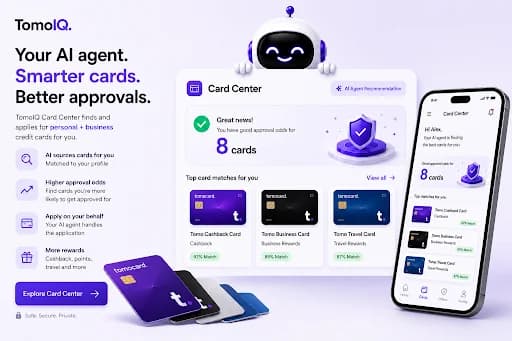
ChatGPT gave surprisingly solid advice on how to build credit — but the more I read its answer, the more I realized it was giving information, not guidance.
The language used on this page is for creative purposes only. TomoCredit (or TomoBoost) does not guarantee an increase in credit score. Individual results vary based on each person's unique credit history and financial circumstances, and subscription payments are non-refundable.
Meet TomoIQ
Your AI-powered credit assistant.